
Collection: TDK D (Dynamic) Type I Normal Bias Cassette Tapes

-

 On Sale!
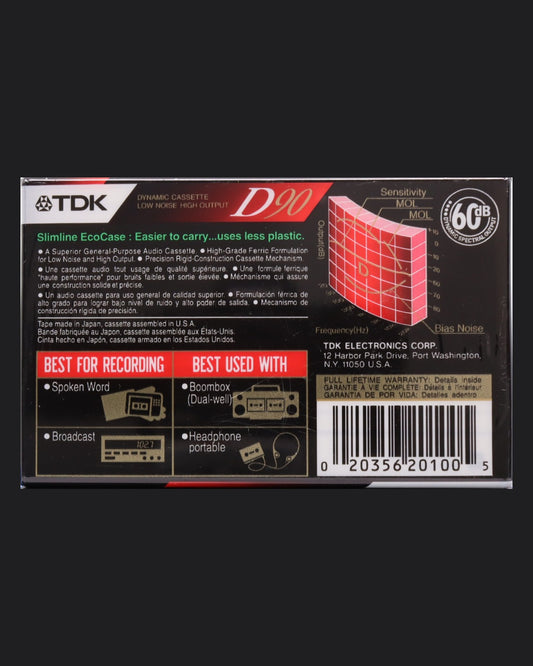
TDK D Type I (1992-1997 US)
Regular price From $6.00 USDRegular price$8.17 USDSale price From $6.00 USDOn Sale! -
 On Sale!
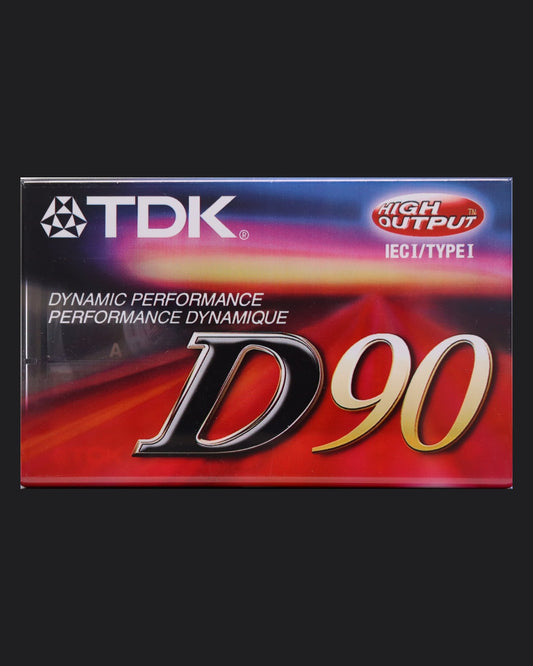
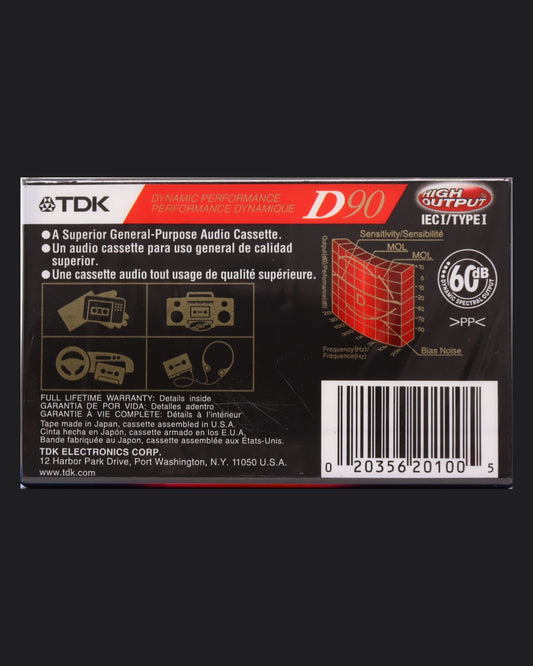
TDK D Type I - 2001-2003 US
Regular price From $6.00 USDRegular price$8.76 USDSale price From $6.00 USDOn Sale! -
TDK D Type I - 1997-2001 US
Regular price From $4.32 USDRegular price -
 Sold out
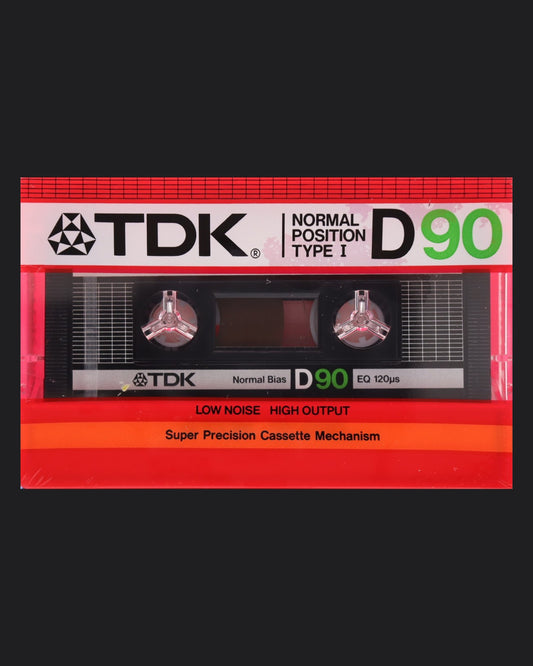
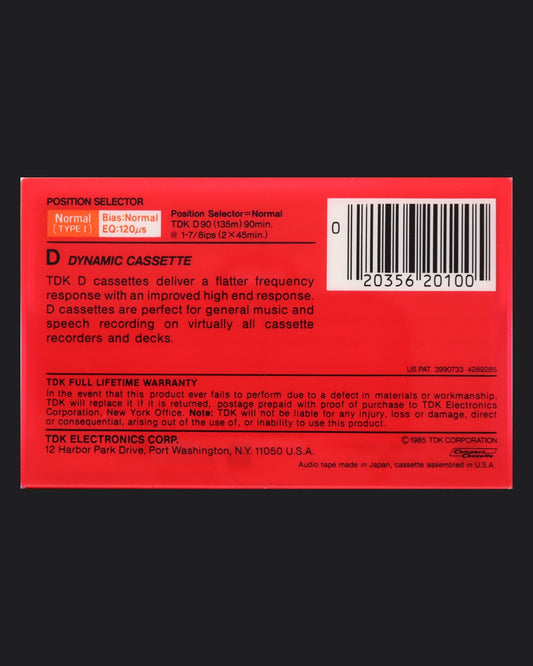
TDK D Type I - 1984-1986 US
Regular price From $12.59 USDRegular price -
TDK D Type I - 1990-1995 US
Regular price From $3.77 USDRegular price -
TDK D Type I - 1986-1987 US
Regular price From $13.09 USDRegular price -
TDK D Type I - 1982-1984 EU
Regular price From $14.87 USDRegular price -
TDK D Type I - 1982-1984 US
Regular price From $17.27 USDRegular price -
TDK D Type I - 1979-1981 JP
Regular price From $16.19 USDRegular price -
TDK D True Mechanism Type I - 1979-1981 EU
Regular price From $149.16 USDRegular price -
TDK D Type I - 1986-1987 EU
Regular price From $13.96 USDRegular price -
 On Sale!
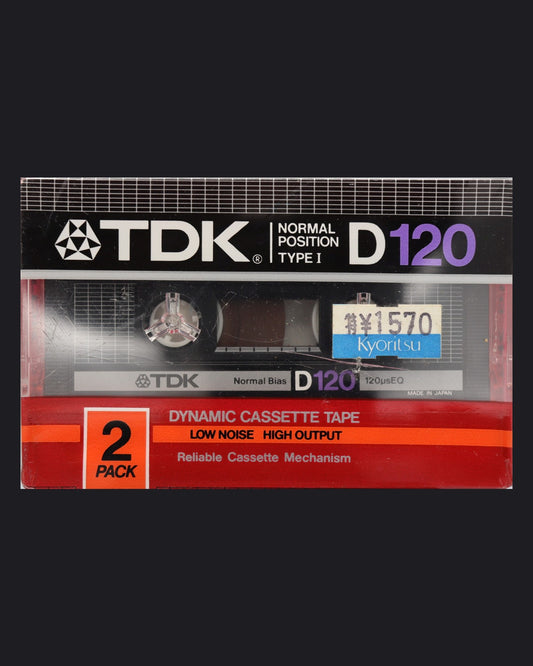
TDK D Type I - 1984-1986 JP
Regular price $36.42 USDRegular price$41.02 USDSale price $36.42 USDOn Sale! -
TDK D Type I - 1975-1978 JP
Regular price $17.78 USDRegular price

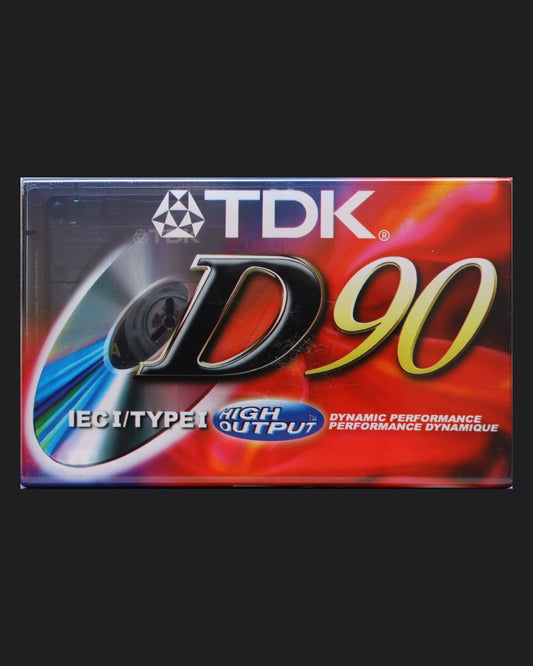
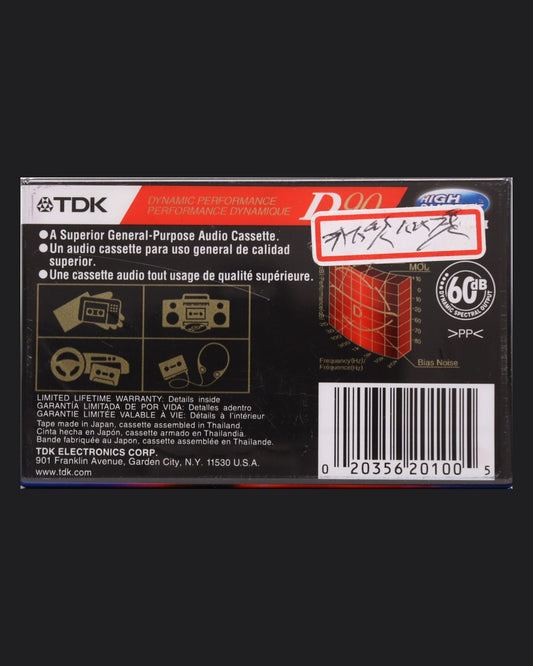

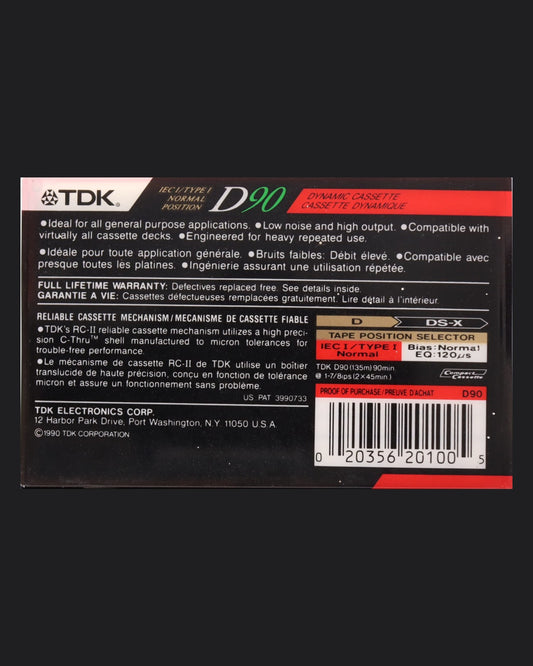
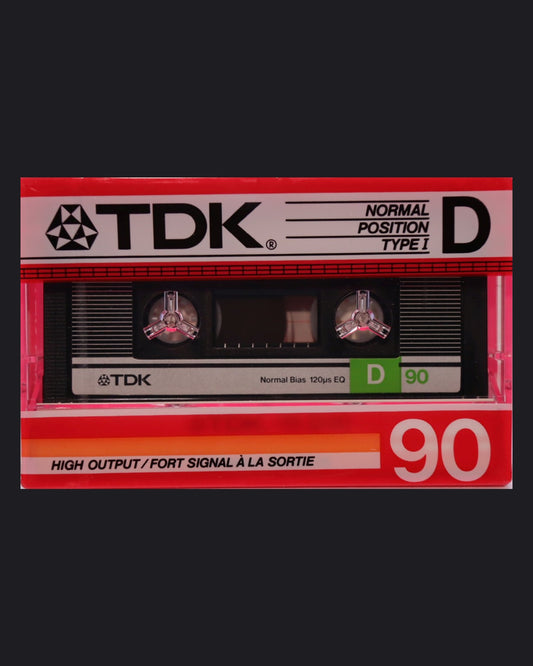
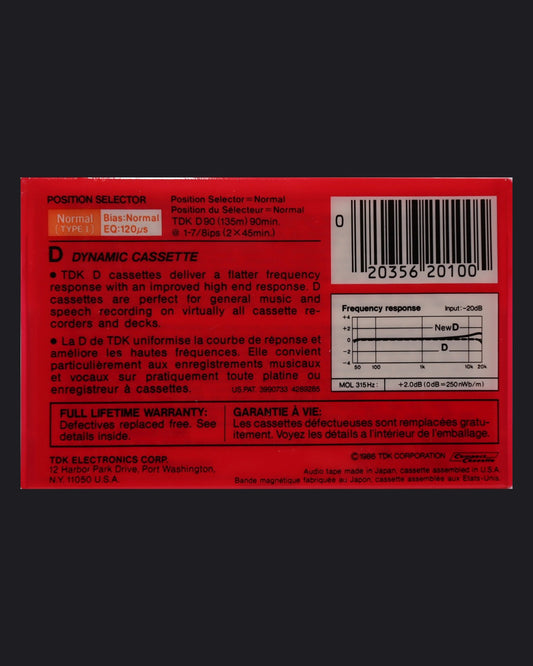

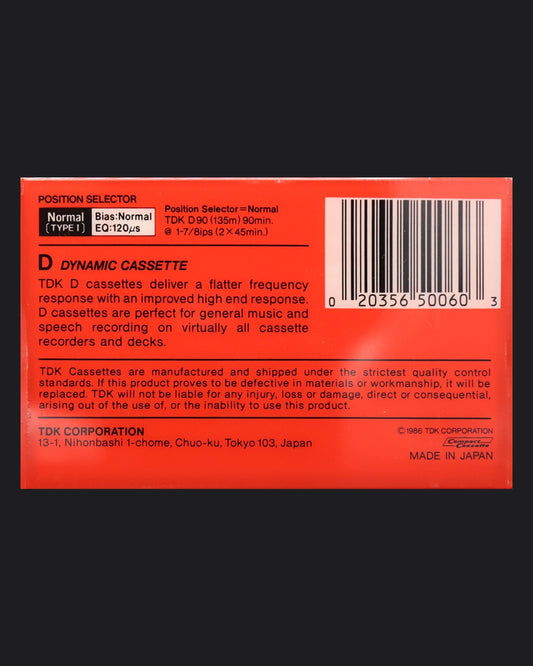

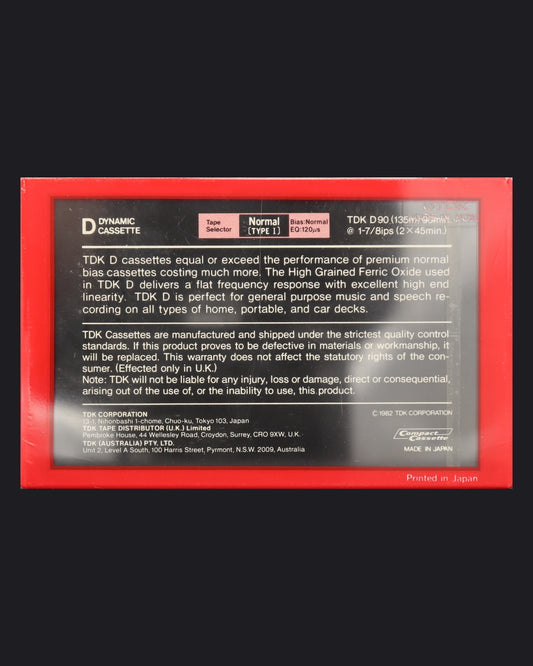
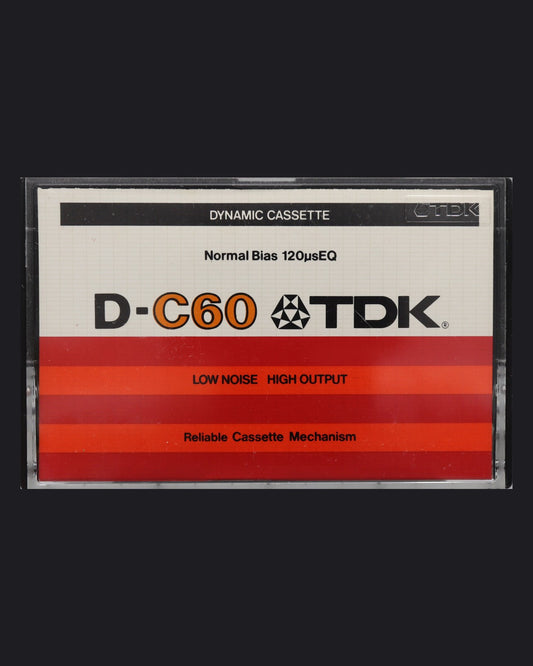
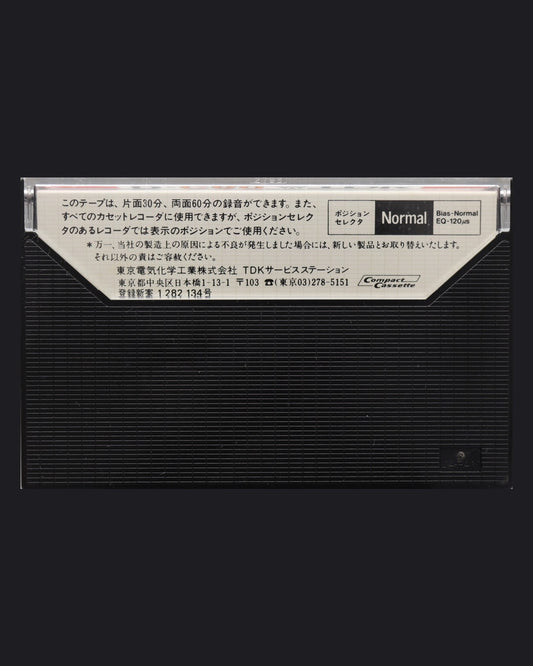
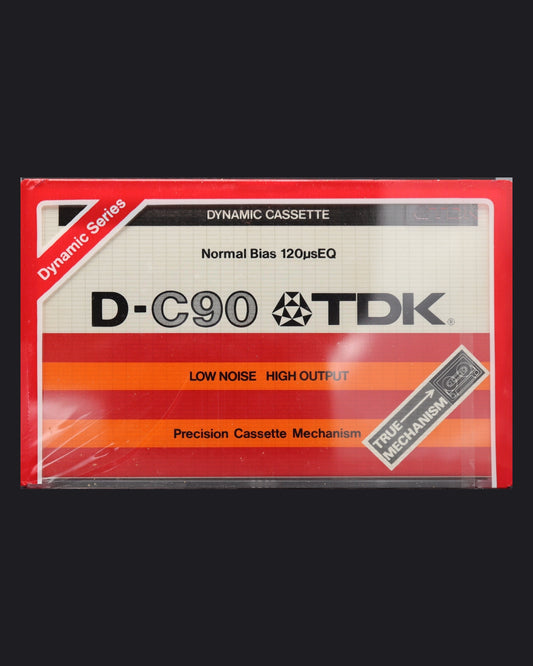
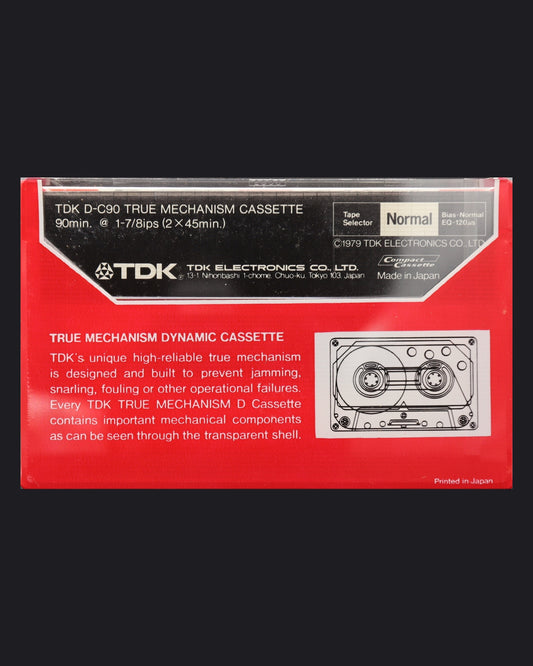

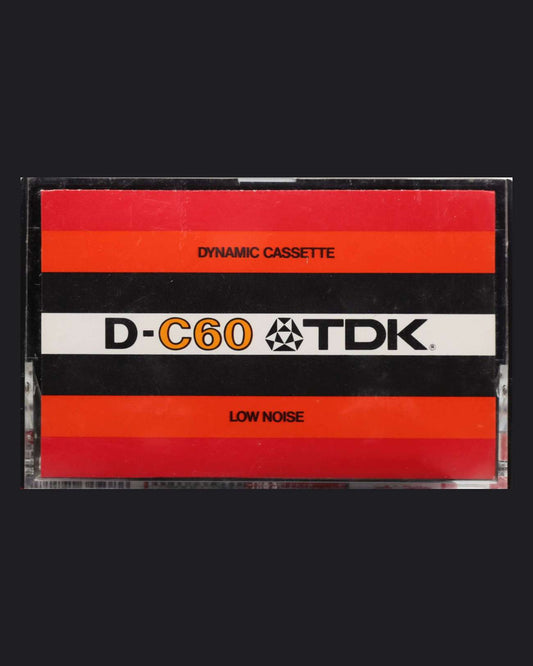
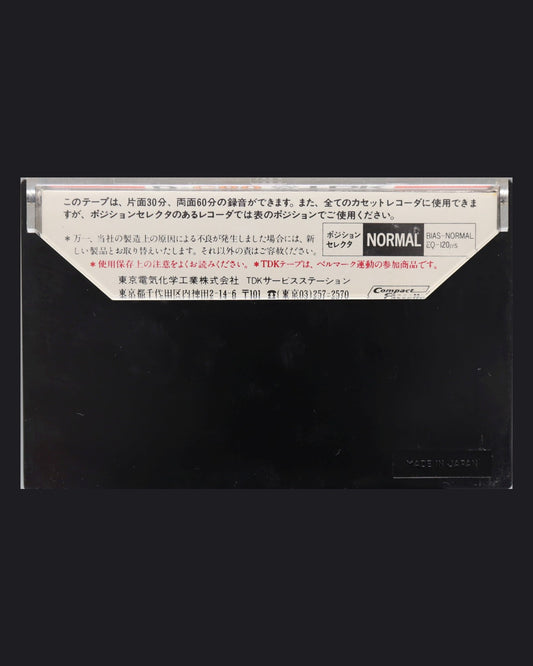
TDK D (Dynamic): The World’s Benchmark Normal Position Tape
The TDK D (Dynamic) series is the most widely used audio cassette in history. Designed as a "workhorse" formulation, it successfully bridged the gap between basic voice recording and high-fidelity music playback. Every generation of TDK D- from the early gray-shell variants of the 1970s to the transparent Precision Mechanisms of the 1990s- utilizes a specialized Grained Ferric magnetic particle designed for maximum compatibility across all hardware tiers.
Technical Evolution: The Grained Ferric Advantage
Unlike the "Linear Ferric" used in the higher-tier TDK AD, the TDK D utilizes a high-density grained ferric oxide. This formulation is engineered for:
- Universal Bias Compatibility: The "D" is optimized for the standard IEC Type I bias setting, ensuring a flat frequency response even on entry-level boomboxes and car stereos.
- Robust Headroom: Despite its "standard" classification, later generations of TDK D (post-1988) achieved a Maximum Output Level (MOL) that rivaled early premium tapes, making them remarkably competent for high-energy music recording.
- Mechanical Reliability: Featuring TDK’s Precision Mechanism, these cassettes are famous for their smooth tape travel and resistance to "tape-edge" damage, even after decades of storage.
TDK D Generation Comparison
| Era | Particle Formulation | Shell Technology | Primary Use Case |
| 1970s | Basic Ferric | Classic Gray Shell | Voice & Radio Recording |
| 1980s | Grained Ferric | Precision Mechanism | Home Mixes & Car Audio |
| 1990s (D/AE) | High-Output Ferric | Modern Transparent Shell | Hi-Fi Archiving |
Why TDK D is Still Relevant for Modern Recording
In the 2026 analog landscape, the TDK D remains the primary recommendation for "Lo-fi" producers and daily listeners. Its "warm" harmonic distortion and predictable saturation levels allow for a classic analog sound without the extreme cost of Type II or IV tapes. If you are recording from a digital source and want "tape character" without overwhelming hiss, the TDK D is the logical architectural choice.