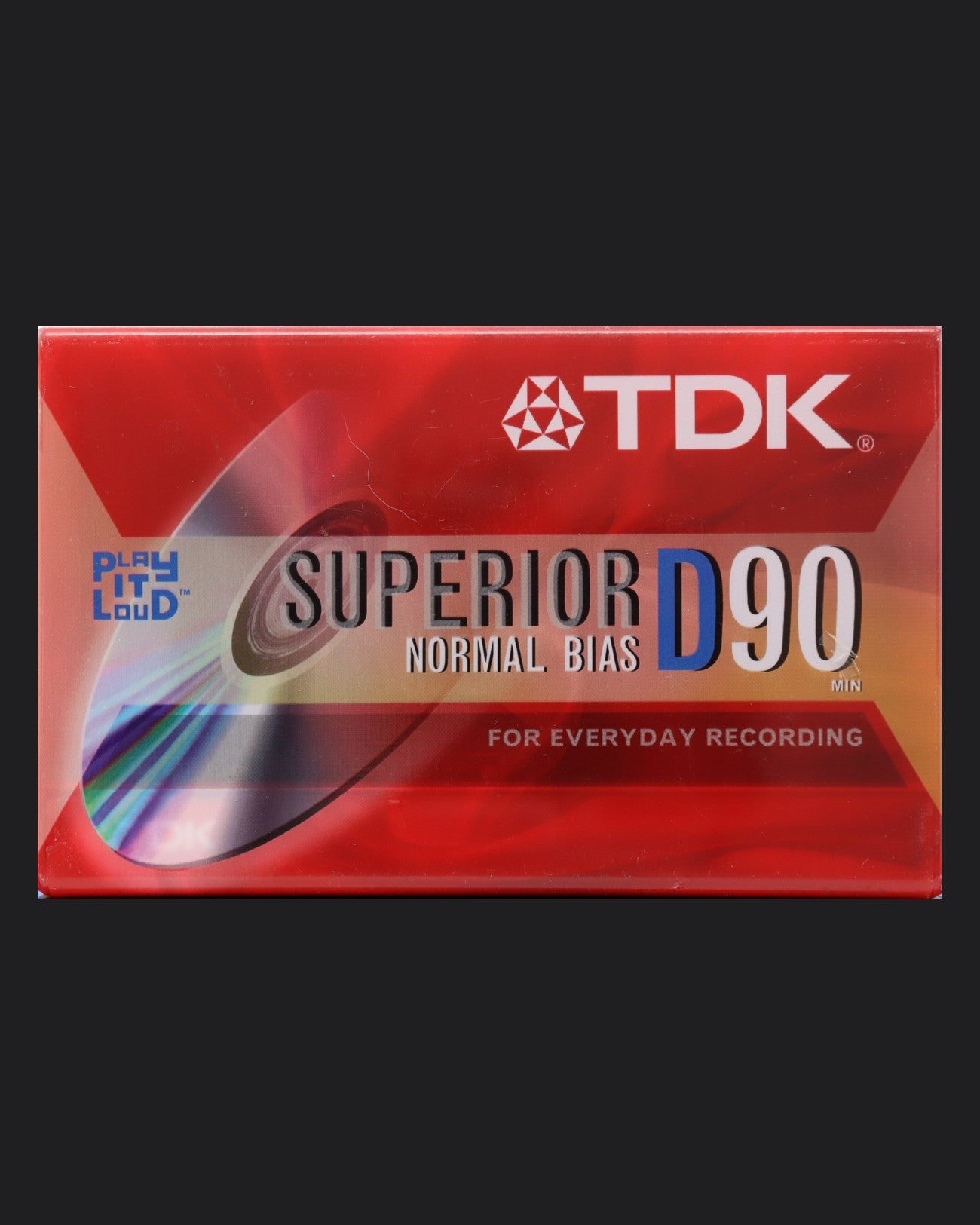
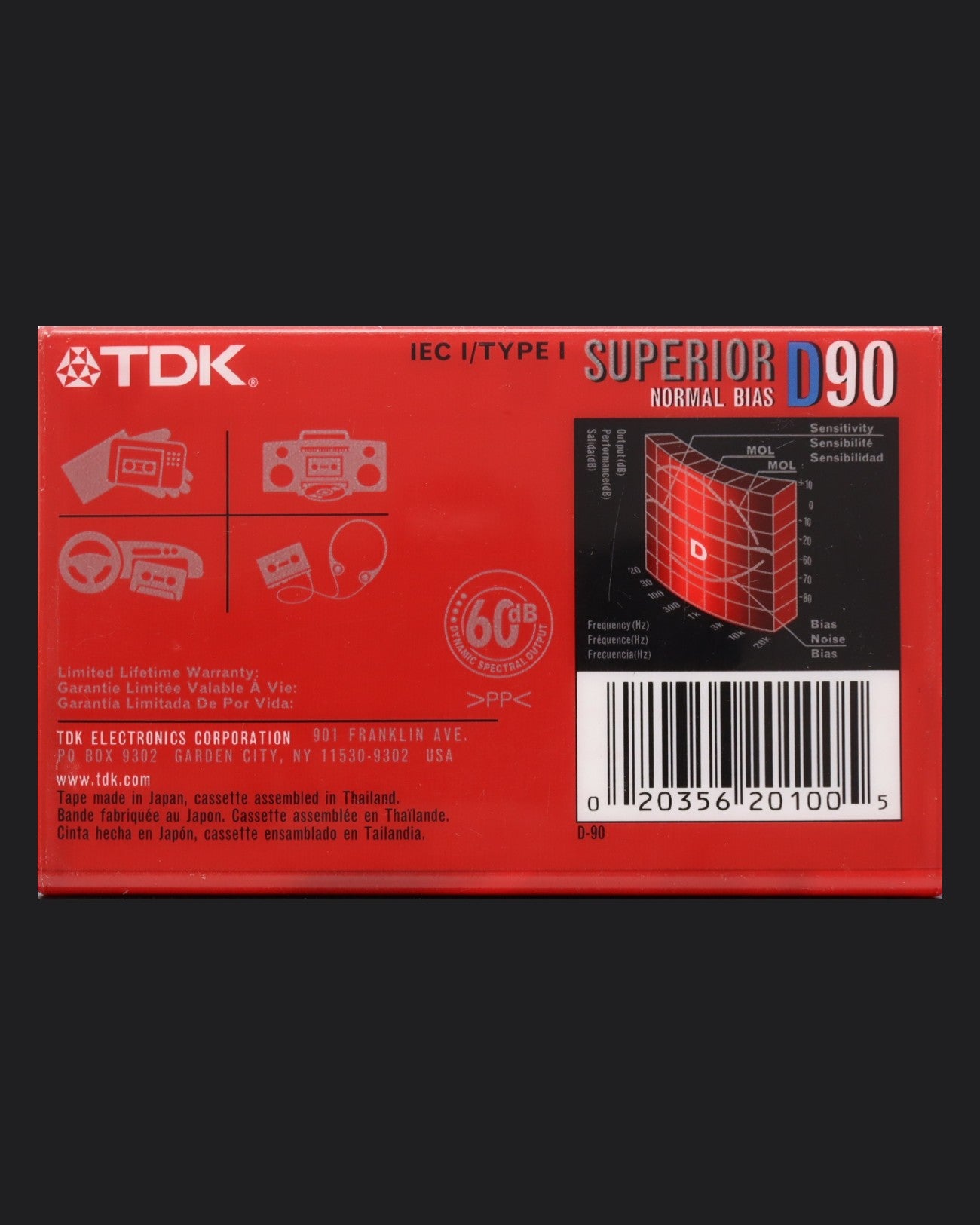
TDK Superior D Type I - 2003-2005 US
TDK Superior D Type I - 2003-2005 US
 Risk free purchase: If it is damaged, we replace it or refund you.
 Sourced through trusted channels; Climate-controlled storage.
 New Old Stock- Not manufactured anymore. Limited quantities.


Only a few left…
Couldn't load pickup availability
🚚 Shipping cost calculated at checkout · Free US shipping over $75 · Returns accepted within 14 days
TDK Superior D (2003-2005 US) Cassette Tape
TDK Superior D Cassette Description
The TDK Superior D (2003-2005 US) is a high-quality, blank audio cassette tape designed for audiophiles and collectors. It is part of the TDK Superior series, known for its superior sound quality and durability. This cassette tape is ideal for recording and playing back high-fidelity audio, ensuring clear and crisp sound reproduction.
TDK Superior D Technical Specifications
- Relative Sensitivity: -0.9 dB (as of 1986 model, exact figure for 2003-2005 model not specified)
- THD @ Dolby Level: 0.7% (as of 1986 model, exact figure for 2003-2005 model not specified)
- MOL400(3%): +3.7 dB (as of 1986 model, exact figure for 2003-2005 model not specified)
- SOL10k: -1.5 dB (as of 1986 model, exact figure for 2003-2005 model not specified)
- Bias Noise: -49.5 dB, -53.0 dB(A) (as of 1986 model, exact figure for 2003-2005 model not specified)
- Dynamic Range: 56.7 dB (as of 1986 model, exact figure for 2003-2005 model not specified)
- Users have praised the TDK Superior D for its excellent sound quality and durability. One reviewer noted that the tape performed flawlessly after 40+ years, indicating its high-quality construction and longevity.
TDK Superior D Key Features
- High-Fidelity Sound: Designed for high-fidelity audio recording and playback.
- Durability: Constructed to withstand long-term use without significant degradation.
- Blank Tape: Ideal for recording and playing back music, voice, or other audio content.
Improvements Over Previous Generation
The TDK Superior D (2003-2005 US) builds upon the performance of its predecessors, offering improved dynamic range and reduced distortion. The exact improvements are not specified, but it is noted that the 1998 model showed significant advancements in MOL and SOL, indicating a trend of continuous improvement in the series.