
-
BASF Professional III (1976-1978 US) Cassette Tape
Regular price $32.08 USDRegular price -
Sony DUAD (1978-1981 JP)
Regular price From $68.80 USDRegular price -
Sony FeCr (1978-1981 US)
Regular price From $68.80 USDRegular price
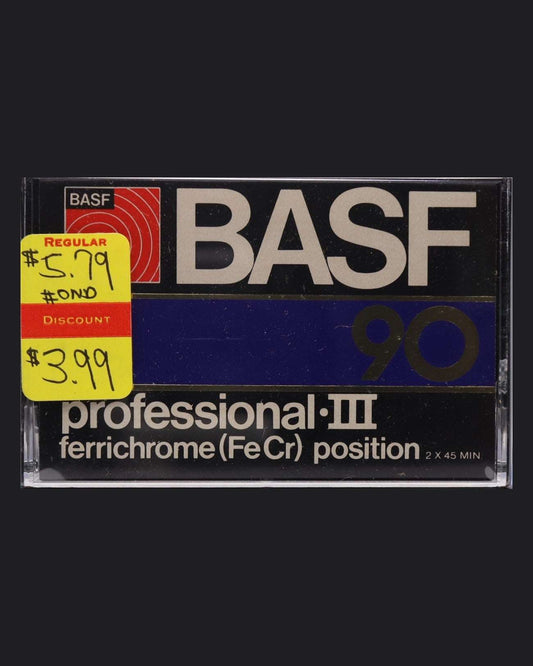
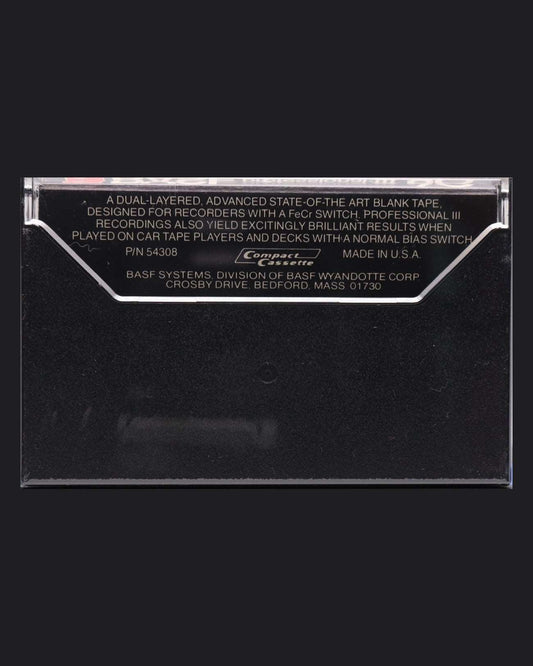

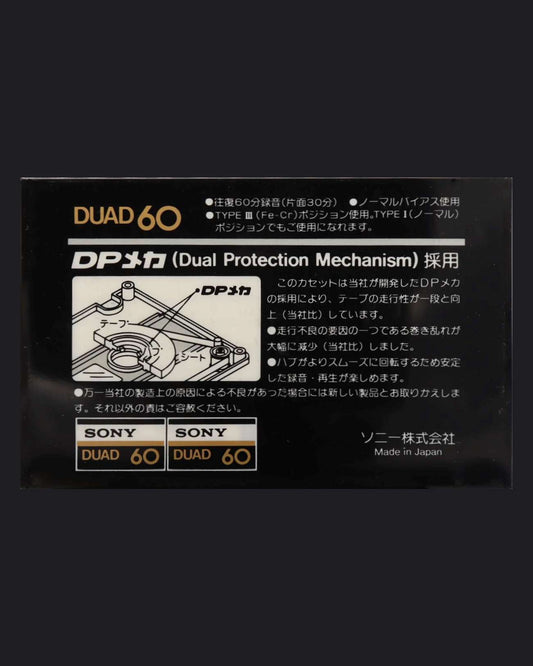

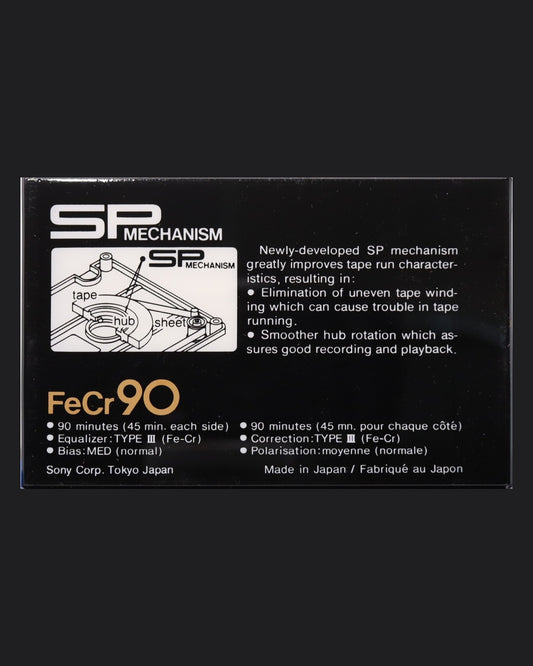
Type III — FeCr Ferrochrome Blank Cassette Tapes
Type III — designated IEC III and known as ferrochrome or FeCr — is the rarest and most historically significant of the IEC cassette tape standards. Introduced by Sony in 1973, these tapes use a dual-layer construction: a five-micron ferric oxide base layer coated with one micron of chromium dioxide pigment on top. The idea was to combine the strong low-frequency output of ferric oxide with the superior high-frequency definition of CrO₂ — "the best of both worlds," as Sony's marketing described it at launch.
Sony demonstrated the first FeCr tapes in 1973 and invited other manufacturers to adopt the formulation. BASF, Scotch, and Agfa followed with their own ferrochrome tapes. The Sony CS301 formulation became the IEC Type III reference. However, the format never gained widespread adoption. Manufacturing dual-layer tape was expensive, deck support was inconsistent (many decks lacked a dedicated FeCr bias position), and by the time Type III reached consumers, ferricobalt Type II formulations offered competitive performance at lower cost. By 1983, deck manufacturers had stopped providing a dedicated Type III recording position, and production ended — Sony discontinued FeCr in 1988, BASF in 1984.
Today, Type III ferrochrome cassettes are among the most collectible tapes in existence. They represent a genuine technological curiosity — an elegant engineering solution that arrived too early, was superseded before reaching its potential, and left behind only small production runs now prized by collectors worldwide.
Playback note: Type III tapes play back best using the CrO₂ / Type II setting (70 μs EQ). If your deck has a dedicated FeCr position, use it. All tapes are NOS sealed. Free US shipping on orders over $75.
Frequently Asked Questions
What is a Type III FeCr cassette tape?
Type III (IEC III), known as ferrochrome or FeCr, uses a dual-layer construction: a ferric oxide base coated with a chromium dioxide top layer. Introduced by Sony in 1973, it was designed to combine the strong low-frequency output of ferric with the high-frequency definition of CrO₂.
Why did Type III cassette tape fail in the market?
Type III required deck support that most manufacturers did not provide, arrived as ferricobalt Type II was maturing into a cheaper alternative, and was superseded by Type IV metal tapes shortly after. By 1983, deck manufacturers stopped providing FeCr recording positions, and production ended — Sony in 1988, BASF in 1984.
Who made Type III FeCr cassette tapes?
Sony introduced the first FeCr tapes in 1973, with the Sony CS301 formulation becoming the IEC Type III reference. BASF, Scotch, and Agfa also produced ferrochrome cassettes. Sony's FeCr remained in production the longest, finally discontinued in 1988.
How do you play back a Type III cassette tape?
Type III tapes play back best using the CrO₂ / Type II (70 μs) equalization setting. If your deck has a dedicated FeCr position, use it — this automatically selects the correct equalization. Sony's own documentation recommended the normal position as an alternative on decks without FeCr support.
Are Type III cassette tapes rare?
Yes. Type III was always a niche format with limited production runs from a small number of manufacturers. Sealed NOS examples are among the most collectible cassettes in existence, prized for their historical significance as an elegant technical experiment that never achieved mainstream adoption.