
-
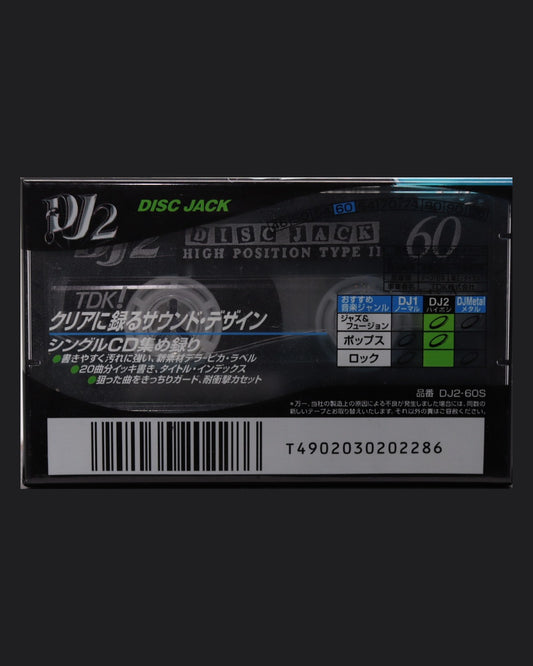
TDK DJ 2 Type II - 1997 JP
Regular price From $16.15 USDRegular price -
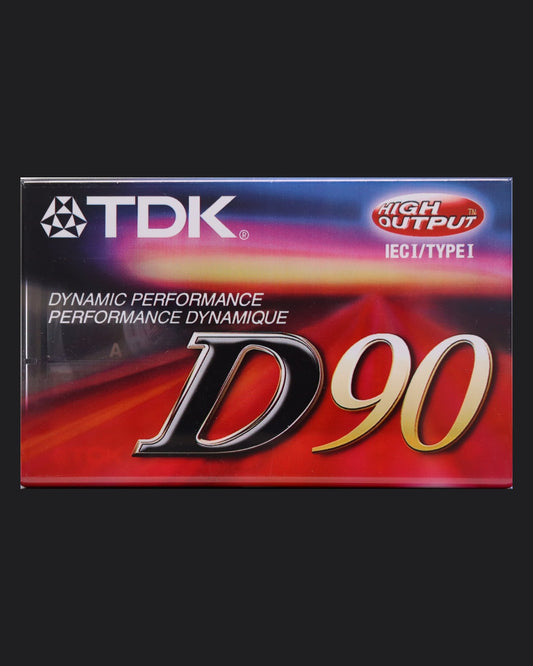
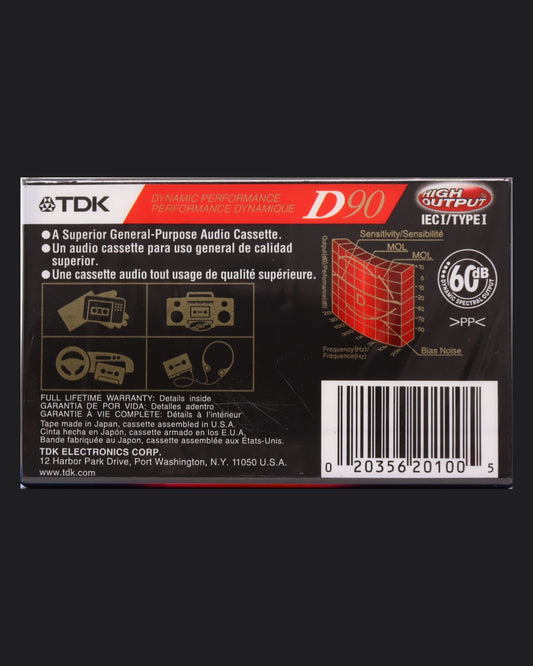
TDK D Type I - 2001-2003 US
Regular price From $6.00 USDRegular price$8.76 USDSale price From $6.00 USD -
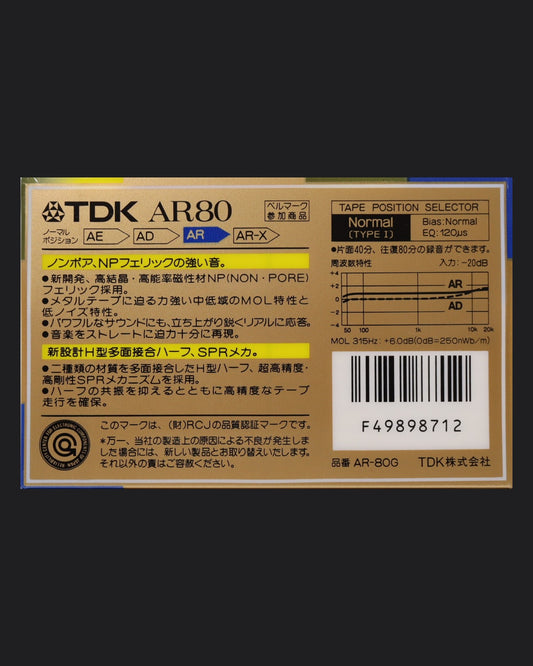
TDK AR Type I - 1987-1988 JP
Regular price From $12.59 USDRegular price -
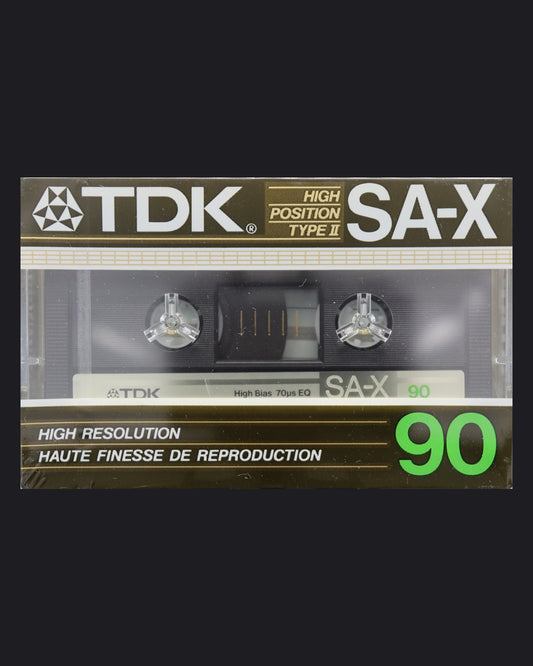
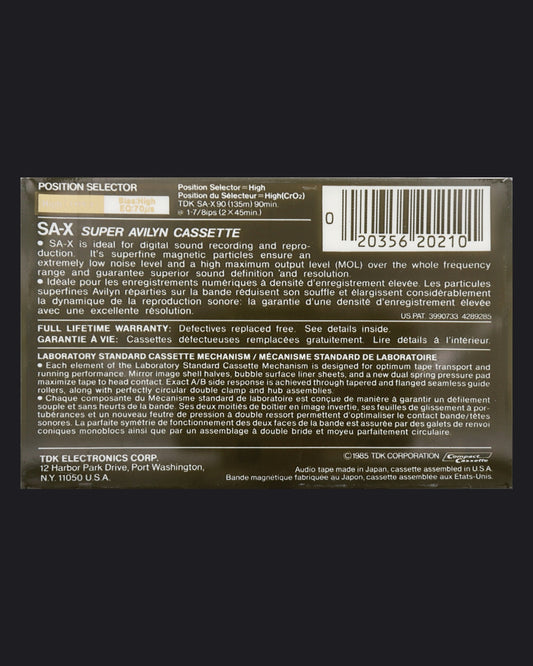
TDK SA-X Type II - 1985-1987 US
Regular price $31.91 USDRegular price -
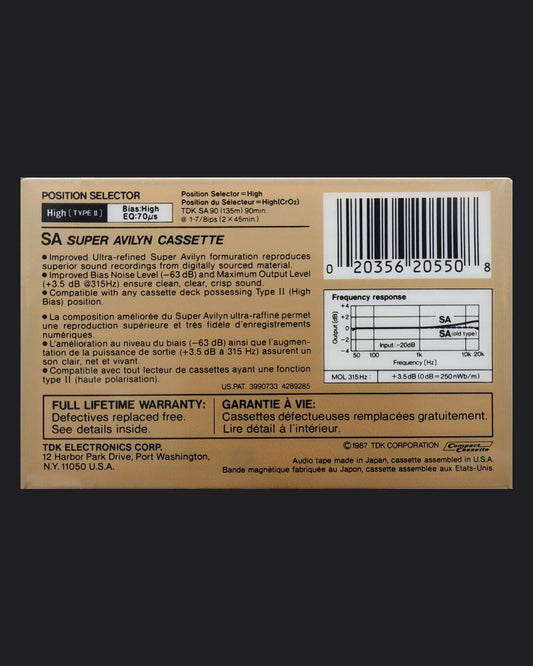
TDK SA Type II - 1985-1987 US
Regular price $22.42 USDRegular price$25.04 USDSale price $22.42 USD -
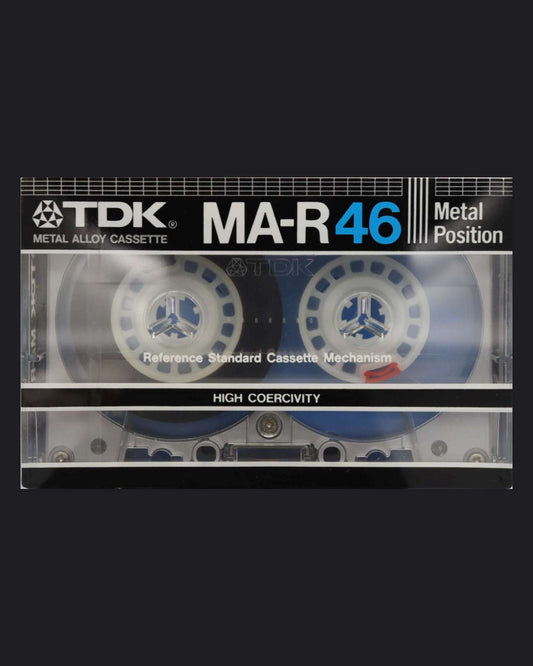
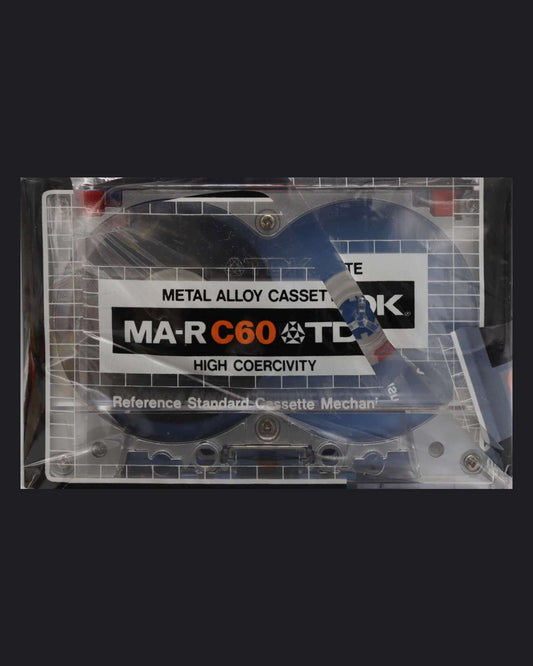
TDK MA-R Type IV - 1982-1984 JP
Regular price From $83.16 USDRegular price -
TDK MA-R Type IV - 1979-1981 JP
Regular price From $85.79 USDRegular price -
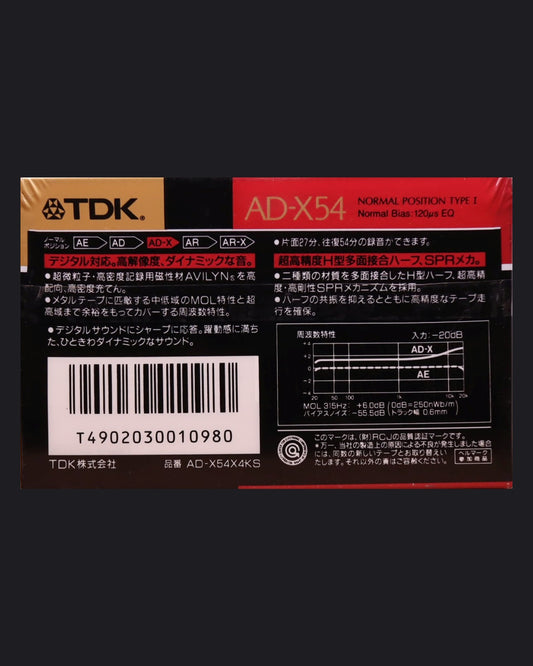
TDK AD-X Type I - 1989 JP
Regular price From $10.19 USDRegular price -
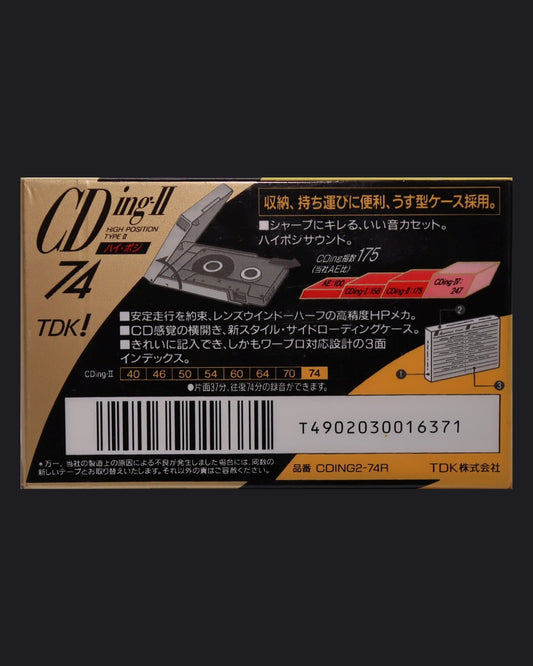
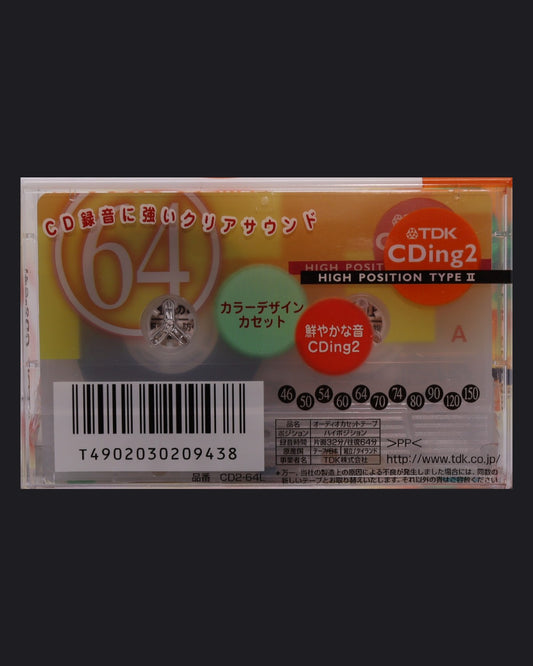
TDK CDing 2 Type II - 2000-2001 JP
Regular price From $12.48 USDRegular price -
TDK CDing 1 Type I - 2005 JP
Regular price From $11.57 USDRegular price$12.78 USDSale price From $11.57 USD -

 Sold out
TDK CDing-II Type II - 1992-1993 JP
Regular price From $12.34 USDRegular price -
TDK BEAM 2 Type II - 1998 JP
Regular price From $17.80 USDRegular price -
TDK AE Type I - 1996 JP
Regular price From $7.03 USDRegular price -
TDK Super CDing II Type II - 1993-1994 JP
Regular price From $15.66 USDRegular price -
TDK MA Type IV - 1992-1995 US
Regular price From $14.99 USDRegular price -
TDK SA-X Type II - 1992-1995 US
Regular price From $19.72 USDRegular price








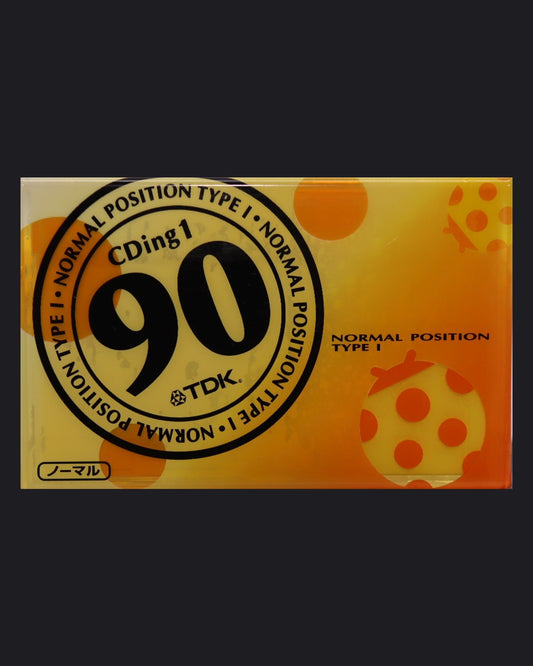


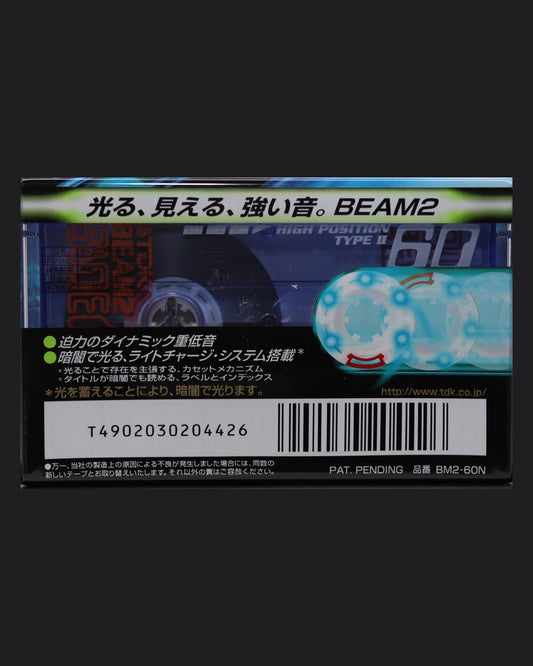

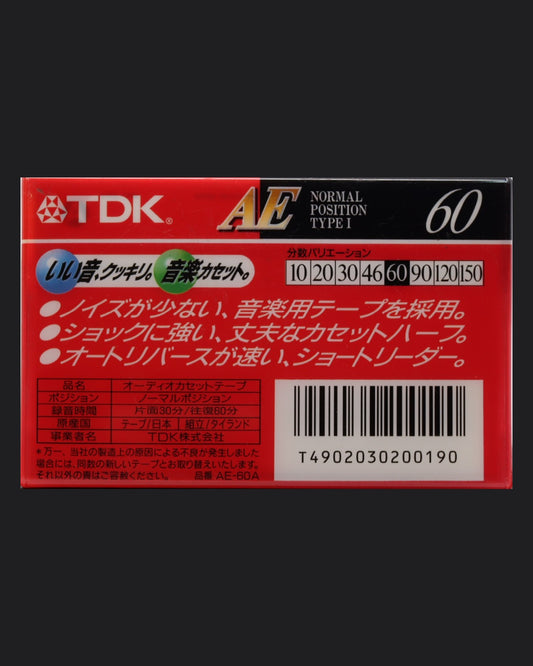

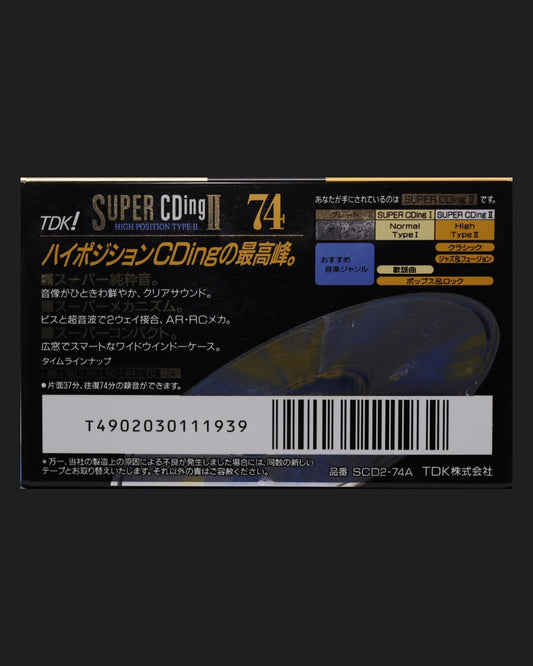

TDK Blank Cassette Tapes
TDK - Tokyo Denki Kagaku Kogyo - was founded by Kenzo Saito on 7 December 1935 to manufacture ferrite, the iron-based magnetic material recently invented by Yogoro Kato and Takeshi Takei. From that foundation in magnetic materials science, TDK became the most technically influential cassette tape manufacturer in the world. In 1952 they produced their first magnetic recording tape; in 1966 they became the first Japanese manufacturer of compact audio cassettes; and in 1968 they launched the world's first high-fidelity cassette - the Super Dynamic (SD) - defying skeptics who believed the cassette format could not support true hi-fi recording.
TDK's most transformative contribution came from researcher Yasuo Imaoka, who developed a process for coating ferric oxide particles with cobalt. The resulting material - named Avilyn - had higher coercivity than chromium dioxide and became the basis for TDK's Super Avilyn formulation, the world's first non-chrome high-bias tape. At its peak, TDK's recording tape division accounted for half the company's total sales, and TDK's integrated tape-production plant - capable of assembling a complete cassette in half a second - was the largest of its kind in the world.
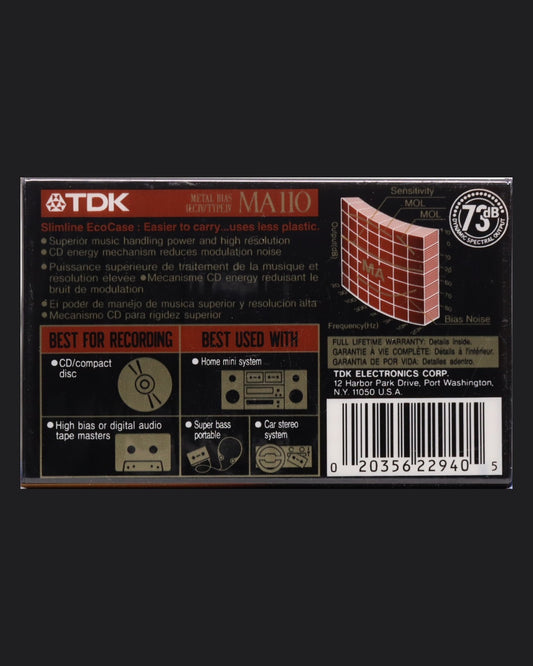
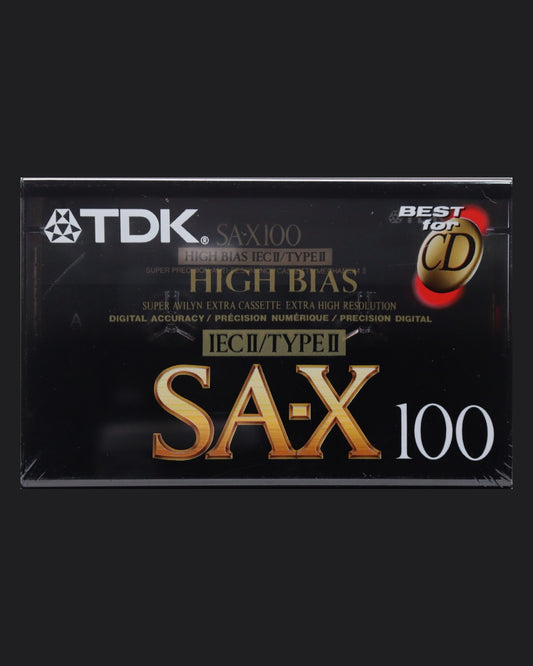
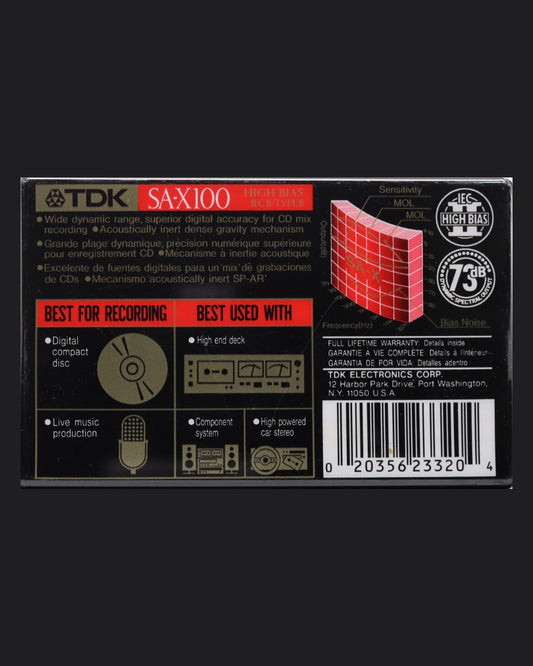
Key TDK models in our collection: The D series (the definitive entry-level Type I, produced from the late 1960s through the 2000s); AD and AD-X (mid-range Type I with Avilyn cobalt formulation); SA and SA-X (TDK's flagship Type II across the 1970s–1990s, using Ultra Avilyn cobalt-modified particles); AR and AR-X (premium super ferric Type I, approaching metal tape performance); MA and MA-R (TDK's Type IV metal line, the MA-R housed in a precision die-cast alloy shell); and the Professional SM-X (a studio-grade Type II used by broadcast engineers worldwide).
TDK sold its recording media business to Imation in 2007, making all surviving NOS cassettes finite collector's items. All tapes are new sealed NOS. Free US shipping on orders over $75.
Frequently Asked Questions
What are the best TDK blank cassette tapes ever made?
TDK SA-X (Type II) and MA-R (Type IV, die-cast alloy shell) are widely regarded as TDK's finest consumer cassettes. For Type I, the AR-X super ferric is the peak of TDK's normal-bias engineering. The Professional SM-X was TDK's studio-grade Type II, used by broadcast engineers worldwide.
What does TDK stand for?
TDK stands for Tokyo Denki Kagaku Kogyo - Tokyo Electric Chemical Industry. Founded on 7 December 1935 by Kenzo Saito to manufacture ferrite, TDK became the world's leading cassette tape brand before selling its recording media business to Imation in 2007.
What is TDK Avilyn tape?
Avilyn is TDK's proprietary cobalt-modified ferric oxide formulation, invented by researcher Yasuo Imaoka. It enabled TDK to produce high-bias Type II tapes without using chromium dioxide, and became the basis for the SA, SA-X, AR, and AR-X lines. The cobalt-doping technique Avilyn pioneered was later adopted by virtually every other Japanese tape manufacturer.
Are TDK cassette tapes still made?
TDK sold its recording media business to Imation in 2007 and no longer manufactures cassette tapes. All TDK cassettes available today are new old stock (NOS) from original retail or warehouse inventory.
What TDK tape did professional recording studios use?
TDK Professional SM-X (1997–2001) was TDK's studio-grade Type II, specifically engineered for broadcast and professional recording applications. It was used by engineers at major broadcasters who needed consistent, reliable high-bias performance across large production volumes.