
-
RCA RC Type I - 2003 US
Regular price $6.00 USDRegular price -
RCA RC Type I - 1998 US
Regular price From $7.66 USDRegular price

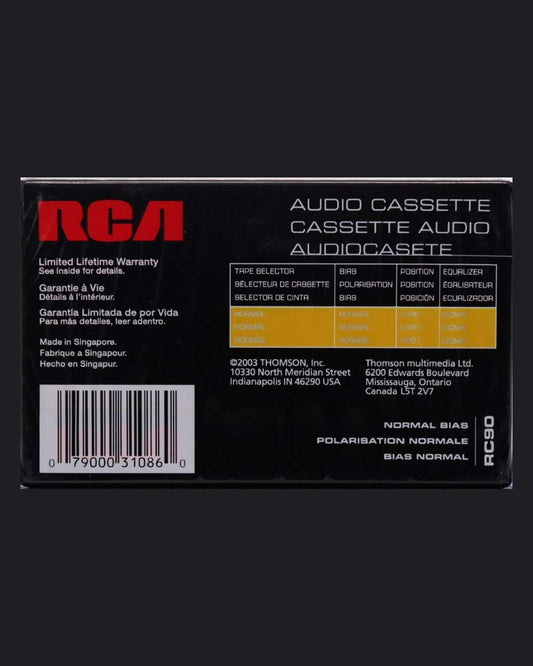

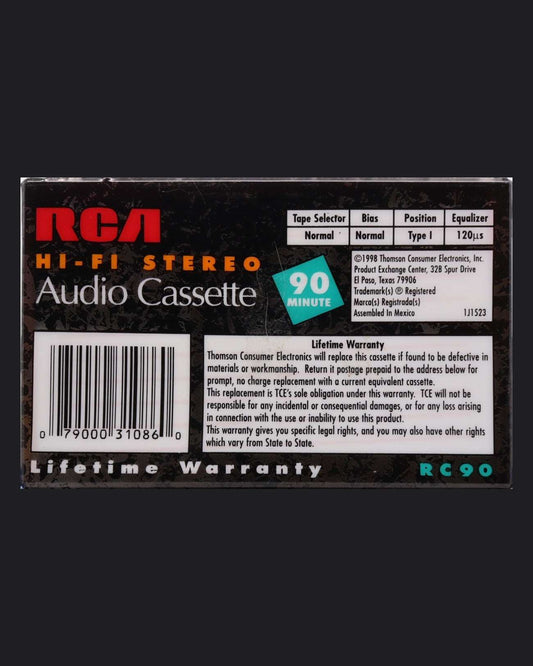
RCA Blank Cassette Tapes
The Radio Corporation of America — RCA — is one of the most historically significant names in American electronics and recorded sound. Founded in 1919, RCA pioneered radio broadcasting, television, and the recording industry through its RCA Victor label, which introduced the 45 RPM single and drove the mass adoption of recorded music. In the late 1950s, RCA developed its own magnetic tape cartridge format — the RCA Sound Tape Cartridge, introduced in 1958 — which enclosed quarter-inch tape in a closed plastic shell at a time when open-reel recording was still the dominant home audio format. This format predated the Philips compact cassette and anticipated many of the design principles that would make the cassette successful: enclosed tape, simple insertion, and no manual threading.
When the compact cassette became the dominant home recording format, RCA sold blank cassettes under its own name as a consumer convenience product. RCA blank cassettes were widely distributed through mainstream US retail — department stores, drug stores, and electronics retailers — and catered to the everyday recording market rather than the audiophile segment. In terms of provenance and brand recognition, RCA cassettes carry the weight of a name that shaped American audio culture across the entire twentieth century: from the first commercial radio broadcasts to early television to pre-recorded stereo tapes to the compact cassette era.
RCA blank cassettes in our collection span standard Type I formulations from multiple US market vintages. They represent a straightforward slice of mainstream American consumer tape history — the everyday recording medium of a generation, sold under one of the most recognizable names in electronics. All tapes are NOS sealed. Free US shipping on orders over $75.
Frequently Asked Questions
What is RCA's history in magnetic recording?
RCA — the Radio Corporation of America — developed the RCA Sound Tape Cartridge in 1958, one of the first closed-shell magnetic tape formats, predating the Philips compact cassette by five years. RCA Victor's recording studios used Scotch magnetic tape for professional recordings throughout the golden age of American popular music.
What is the RCA Sound Tape Cartridge?
The RCA Sound Tape Cartridge (1958) enclosed quarter-inch tape in a closed plastic shell for effortless insertion without manual threading — anticipating the design principles that made the compact cassette successful. It operated at 3.75 ips with four tracks and was one of several competing formats before Philips' cassette became the universal standard.
Are RCA blank cassette tapes good quality?
RCA blank cassettes were consumer-grade products distributed through mainstream US retail — department stores, drug stores, and electronics chains. They catered to the everyday recording market rather than the audiophile segment, offering solid reliability for speech, radio recording, and casual music use.
What cassette tape formulations did RCA produce?
RCA sold standard Type I (normal bias) ferric cassettes as their primary blank tape product across multiple generations through the 1970s to the early 2000s. These were practical everyday recording cassettes rather than high-performance audiophile products.
Are RCA cassette tapes collectible?
RCA cassettes are collected primarily for their brand heritage — the name that shaped American audio culture from radio to television to recorded music — rather than for audiophile performance. Early-generation examples and unusual variants hold the most interest for cassette historians.