
-
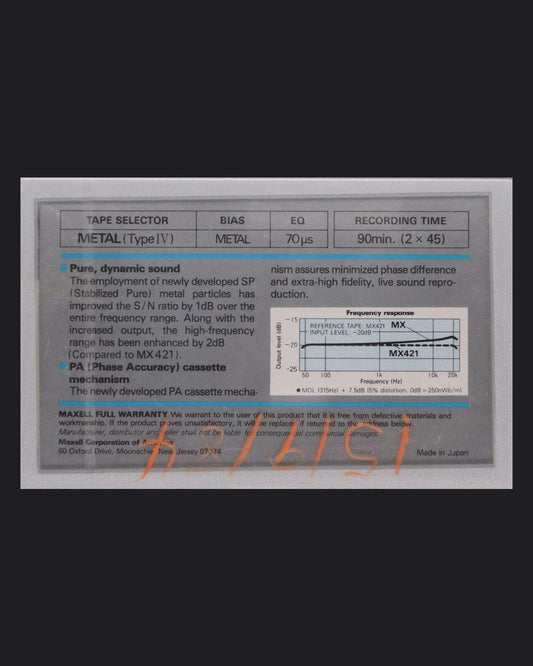
Maxell MX Type IV - 1982-1983 US-JP
Regular price From $29.39 USDRegular price -
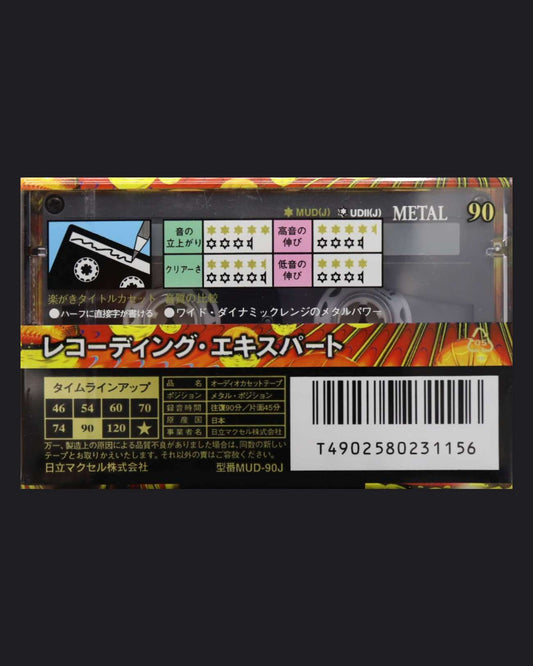
Maxell Metal UD Type IV - 1995-1996 JP
Regular price From $21.59 USDRegular price -
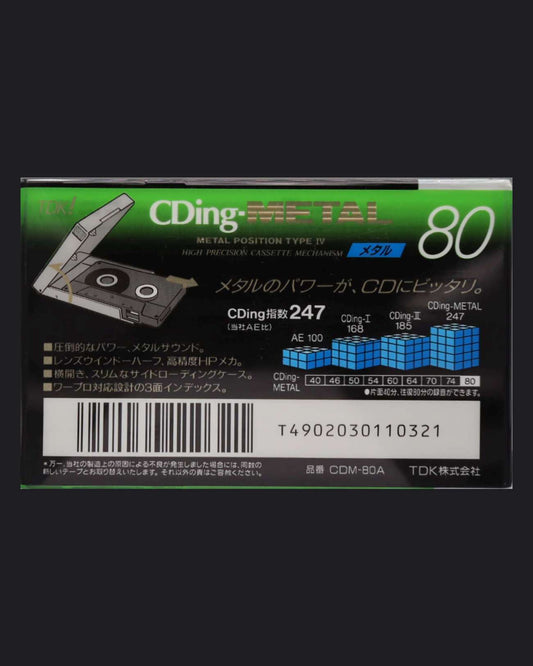
TDK CDing Metal Type IV - 1993-1994 JP
Regular price From $32.16 USDRegular price -
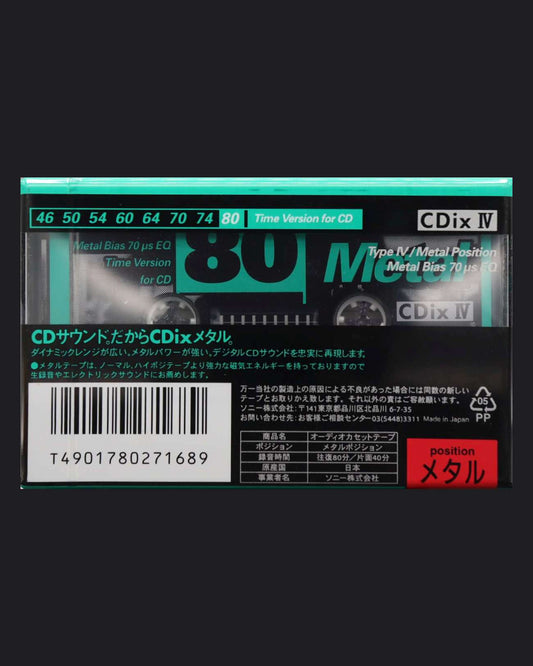
Sony CDix IV Type IV - 1994 JP
Regular price From $28.72 USDRegular price -
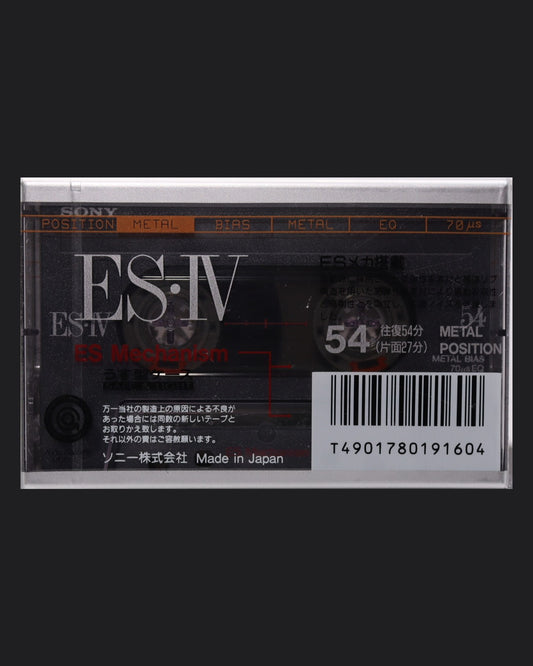
Sony ES IV Type IV - 1992 JP
Regular price From $49.30 USDRegular price -
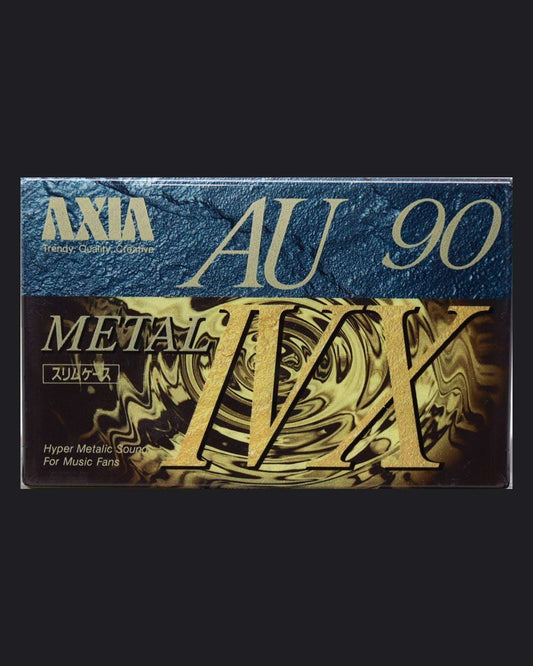
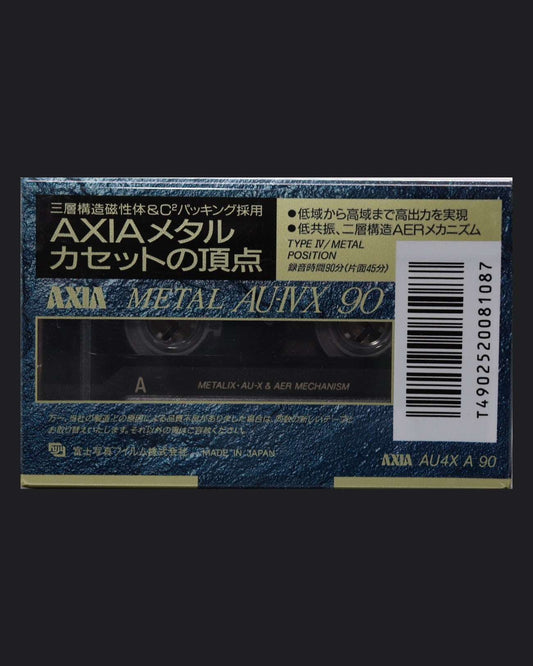
AXIA AU-IVX Type IV - 1993-1994 JP
Regular price From $23.39 USDRegular price -
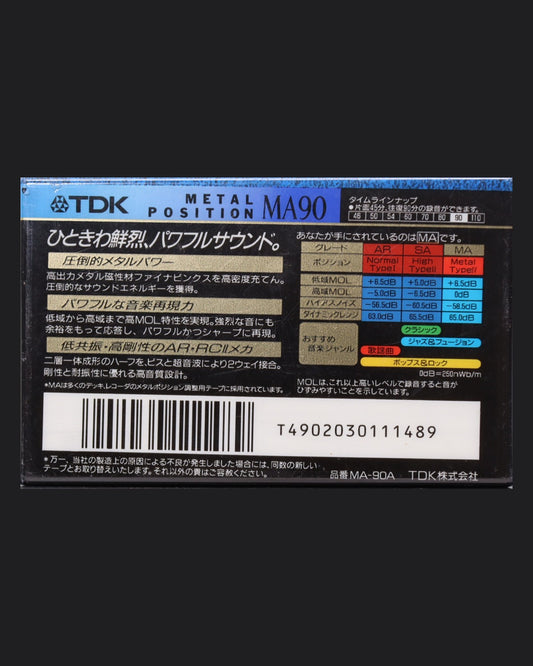
TDK MA Type IV - 1993-1994 JP
Regular price From $16.19 USDRegular price -
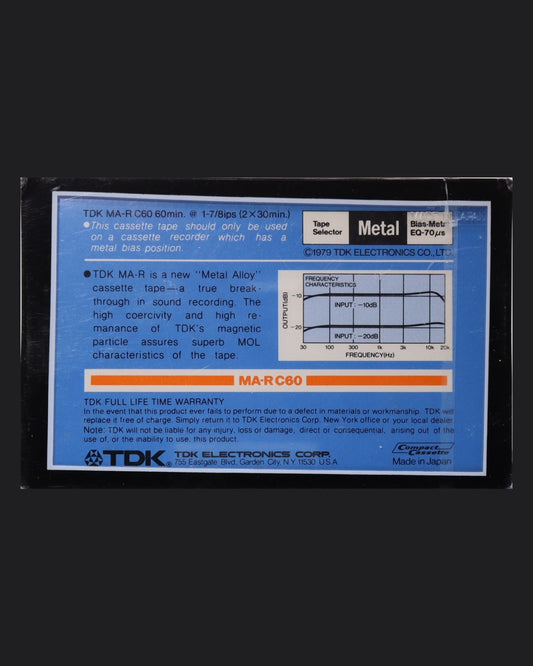
TDK MA-R Type IV - 1979-1981 US
Regular price From $145.60 USDRegular price -
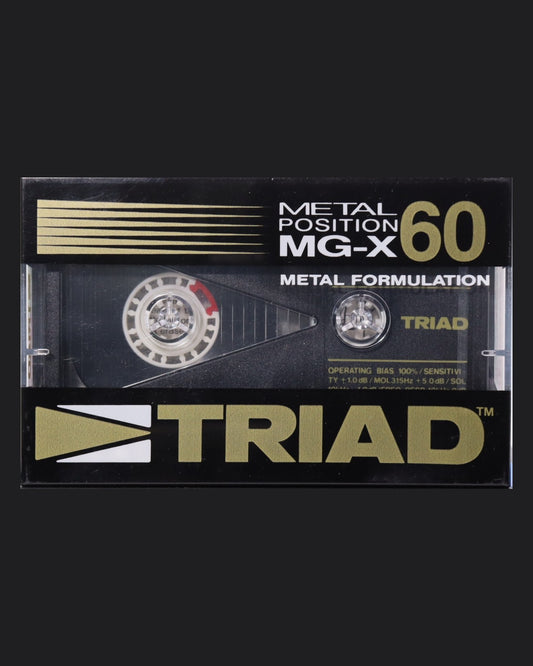
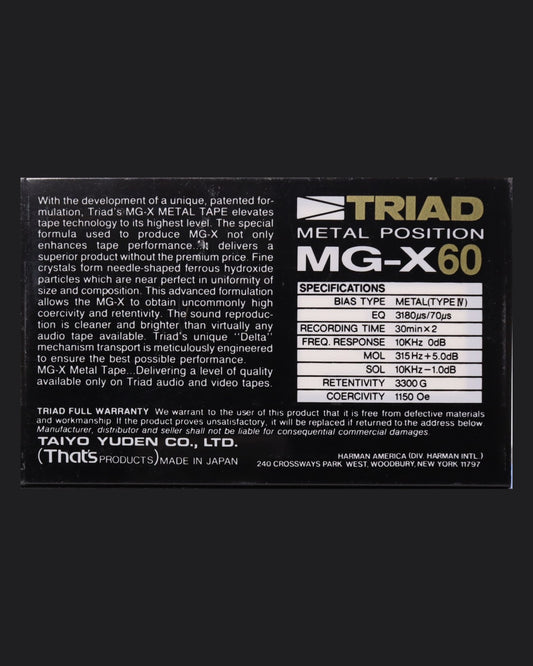
Triad MG-X Type IV - 1986-1987 US
Regular price $59.17 USDRegular price -
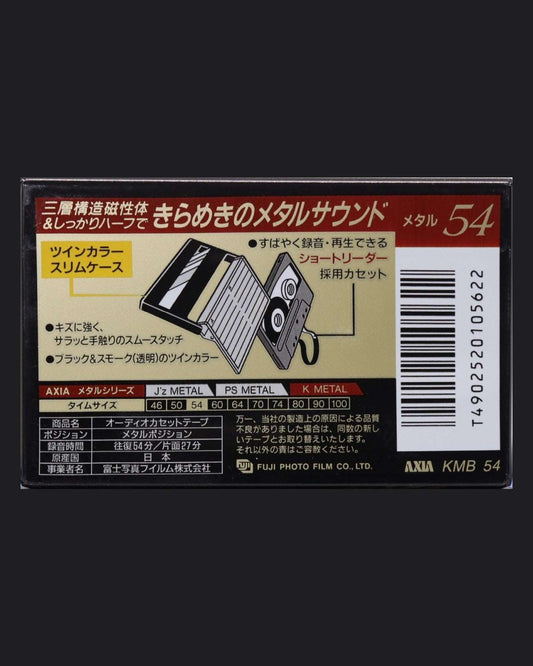
AXIA K Metal Type IV - 1995 JP
Regular price From $30.17 USDRegular price$33.77 USDSale price From $30.17 USD -
Maxell MX Type IV - 1990-1991 US
Regular price From $32.02 USDRegular price -
Maxell MX Type IV - 1988-1989 US
Regular price From $19.79 USDRegular price -
Fuji Metal Z Type IV - 1995-1997 US
Regular price From $39.01 USDRegular price -
That's AS:IV Type IV - 1991-1992 US
Regular price $36.82 USDRegular price$45.24 USDSale price $36.82 USD -
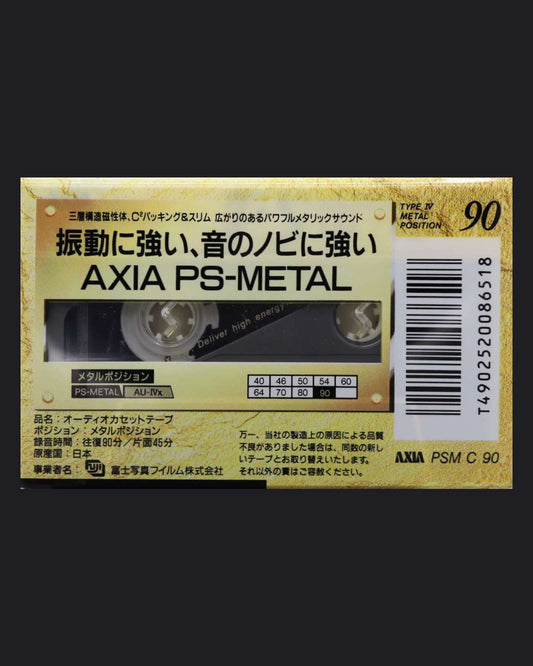
AXIA PS-Metal Type IV - 1993-1994 JP
Regular price From $37.31 USDRegular price -
Sony Metallic Type IV - 1978-1982 US-JP
Regular price From $62.74 USDRegular price$65.02 USDSale price From $62.74 USD









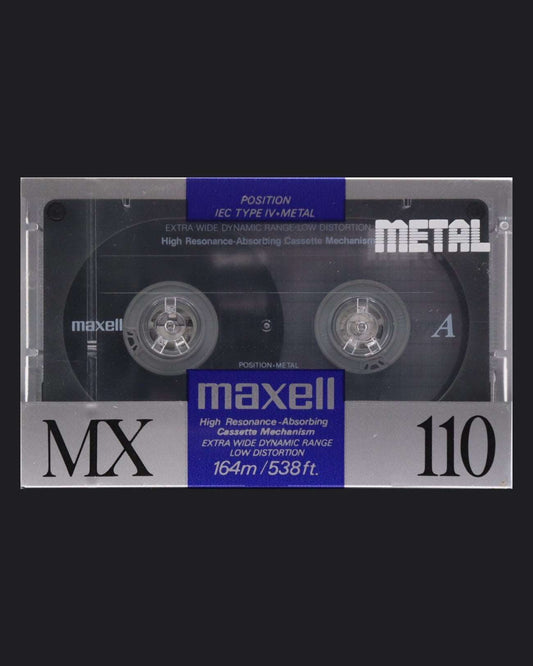

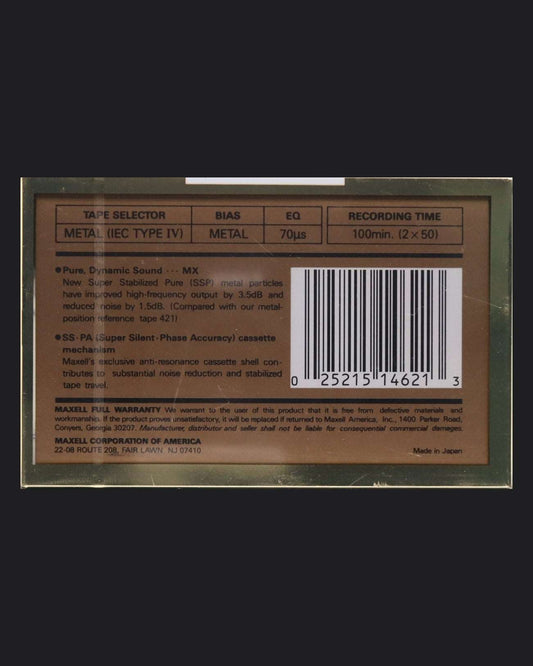
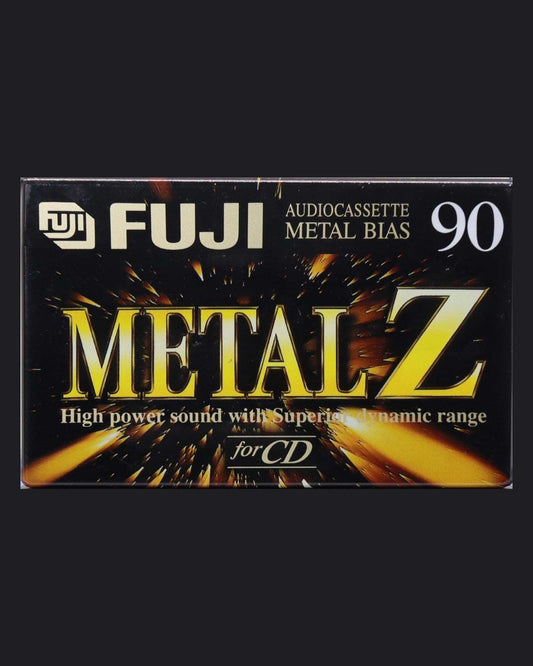
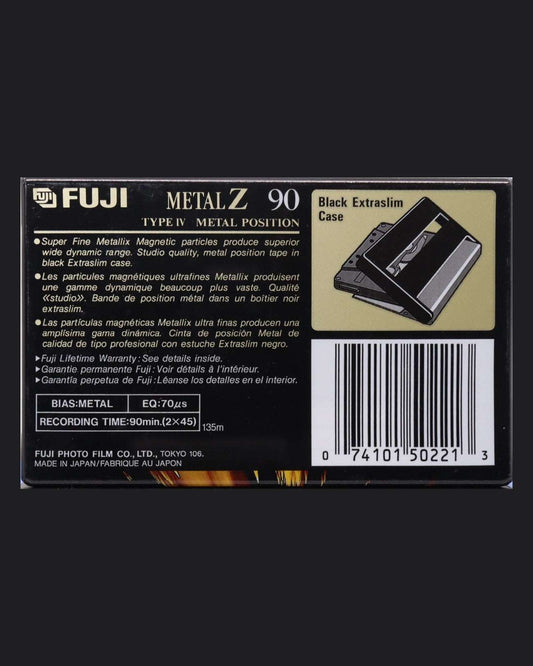




Type IV Metal Blank Cassette Tapes
Type IV — designated IEC IV and universally known as "metal" — is the highest-performance cassette tape format ever standardized. Metal tapes use pure metal particles (primarily iron, sometimes alloyed with cobalt) rather than metal oxide particles, giving them coercivity values of 1,000–1,200 Oe and remanence figures reaching 3,000–3,500 G or higher. The IEC established the Type IV standard in 1979, requiring a recording bias approximately 250% higher than Type I and the same 70 μs playback equalization as Type II.
The practical result is the widest dynamic range, highest maximum output level, and lowest noise floor of any cassette formulation. A well-calibrated deck recording on a quality Type IV tape can achieve dynamic range figures comparable to open-reel tape at 7.5 ips — a remarkable achievement for a format running at 4.76 cm/s. Type IV tapes also resist self-demagnetization more effectively than oxide formulations, making long-term archival storage more reliable.
Metal tapes require a deck with a dedicated Type IV (metal) position — both for the higher recording bias and for the two additional shell notches that trigger automatic bias selection. They cannot be recorded with correct results on a deck lacking a metal setting, though they can be played back on any deck using the CrO₂/Type II equalization setting.
Standard Type IV models: TDK MA and MA-R, Maxell MX and MX-S, Sony Metal XR and Metal SR, Fuji Metal, BASF Metal, Denon HD-M, That's MR — these are the standard-bearers of Type IV, available in a wide range of lengths and vintages.
All tapes are NOS sealed. Free US shipping on orders over $75.
Frequently Asked Questions
What is a Type IV metal cassette tape?
Type IV (IEC IV) uses pure metal particles rather than metal oxide, giving it coercivity of 1,000–1,200 Oe and remanence up to 3,500 G or higher. It requires the highest recording bias (approximately 250% of normal) and 70 μs equalization. The result is the widest dynamic range, highest output, and lowest noise floor of any cassette format.
What deck do I need to record on Type IV metal tape?
You need a cassette deck with a dedicated metal (Type IV) position. This provides the higher bias current and correct equalization. Metal tapes cannot be recorded correctly on a deck without a metal setting, though they can be played back on any deck using the CrO₂/Type II EQ.
What are the best Type IV metal cassette tapes?
TDK MA and MA-R, Maxell MX and MX-S, Sony Metal XR and Metal SR, Fuji FR Metal, BASF Metal IV, and Denon HD-M are the standard-bearer Type IV tapes. For premium performance, Sony Metal ES, Maxell Metal Capsule, TDK MA-XG, and the Sony Metal Master represent the apex of metal cassette engineering.
How does Type IV metal tape sound compared to chrome?
Metal tape delivers noticeably wider dynamic range, higher maximum output levels, and lower noise than Type II chrome. On a well-calibrated deck with a good metal head, Type IV tape approaches open-reel tape performance at 7.5 ips — a remarkable achievement for a format running at 4.76 cm/s.
Are Type IV metal cassette tapes still made?
New production of consumer metal cassette tapes effectively ceased in the early 2000s. All metal tapes available today are new old stock (NOS) — sealed from original production runs. Metal tape is increasingly sought by collectors and recording enthusiasts with calibrated high-end decks.