
-

 Sold out
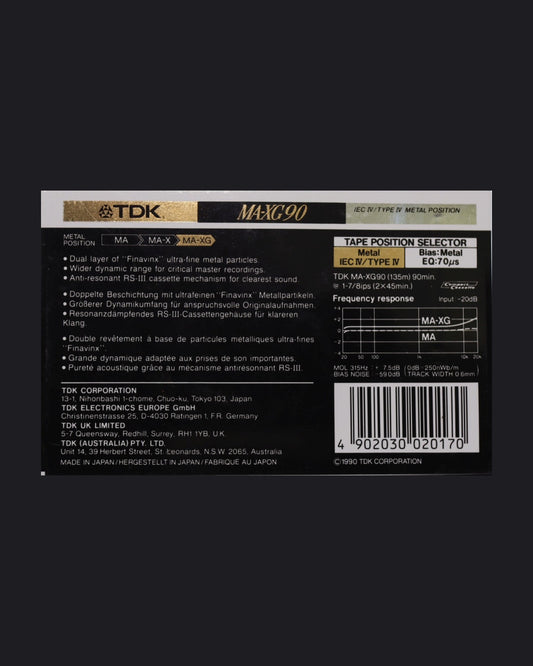
TDK MA-XG Type IV - 1990 EU
Regular price From $117.98 USDRegular price$173.16 USDSale price From $117.98 USDSold out -
Sony Metallic Type IV - 1978-1982 US-JP
Regular price From $62.74 USDRegular price$65.02 USDSale price From $62.74 USD -
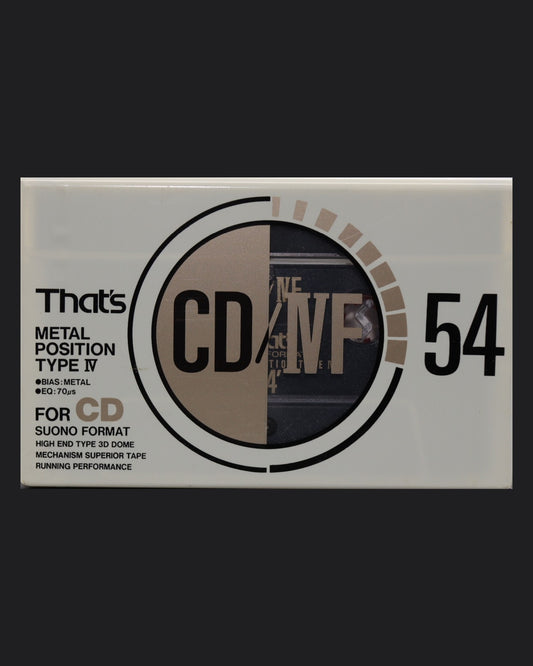
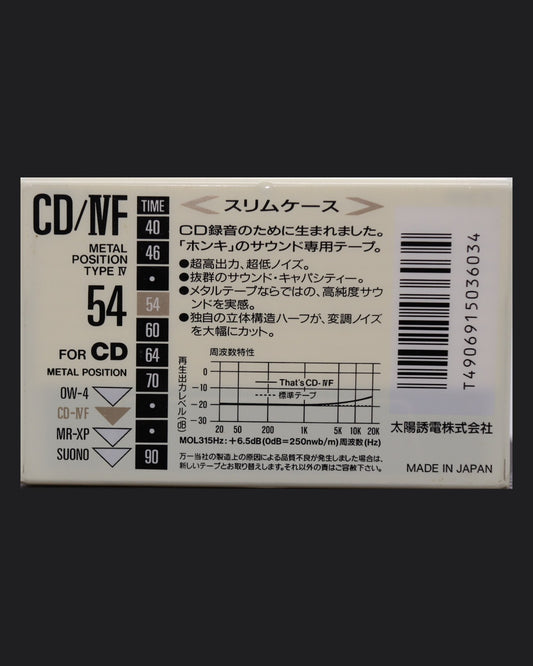
That's CD/IVF Type IV - 1991-1992 JP
Regular price From $57.42 USDRegular price -
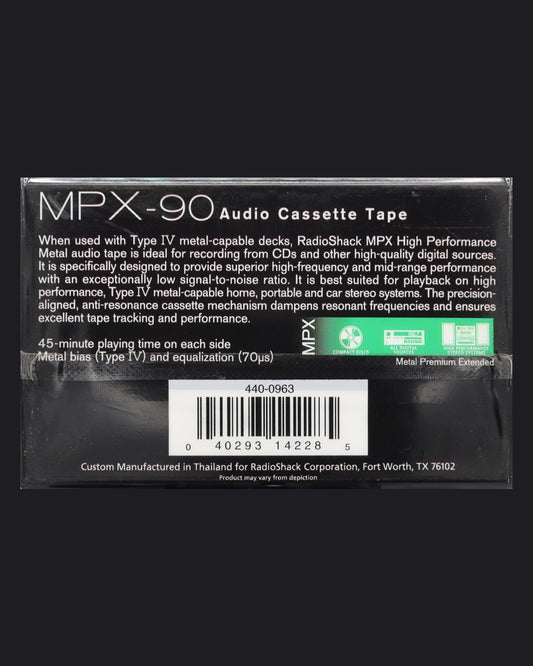
Radio Shack MPX Type IV - 2000-2001 US
Regular price From $52.92 USDRegular price -
That's AS:IV Type IV - 1991-1992 US
Regular price $36.82 USDRegular price$45.24 USDSale price $36.82 USD -
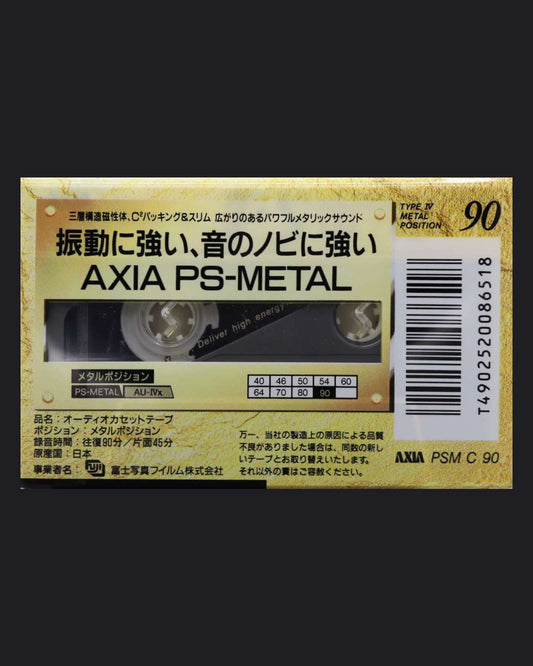
AXIA PS-Metal Type IV - 1993-1994 JP
Regular price From $37.31 USDRegular price -
 Sold out
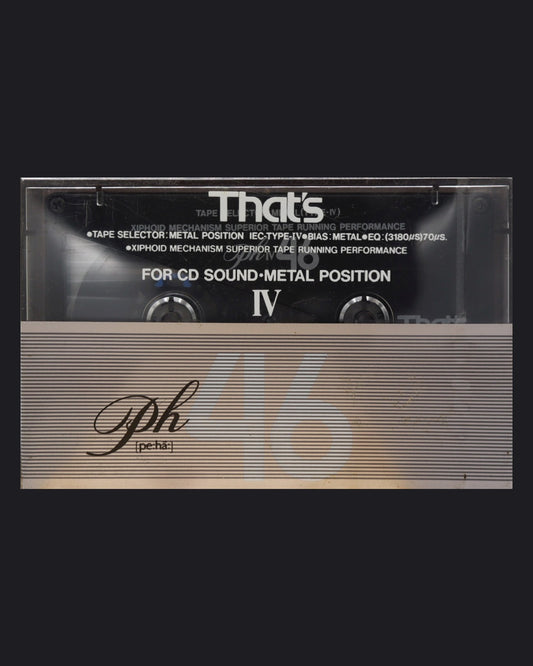
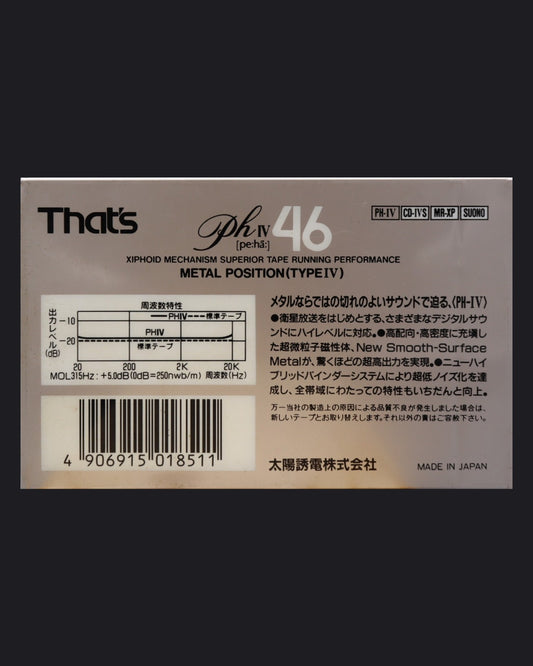
That's PH-IV Type IV - 1989 JP
Regular price From $51.46 USDRegular price -
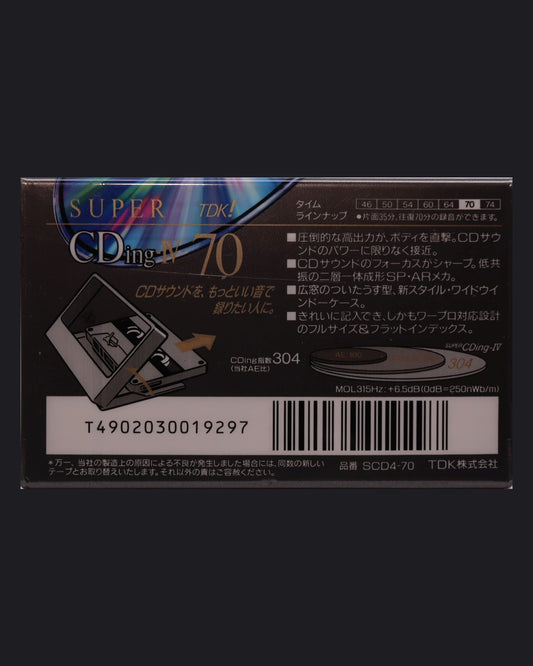
TDK Super CDing-IV Type IV - 1992-1993 JP
Regular price From $33.36 USDRegular price -
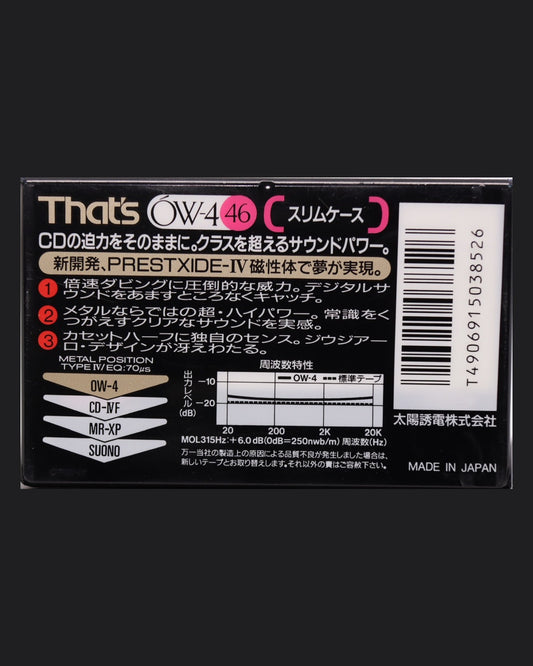
That's OW-4 Type IV - 1991-1992 JP
Regular price From $17.39 USDRegular price -
Nakamichi ZX Type IV - 1983-1989
Regular price From $146.16 USDRegular price -

 Sold out
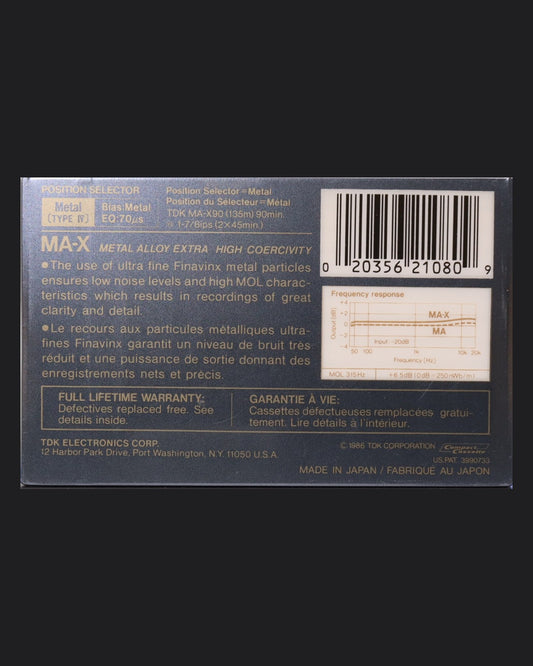
TDK MA-X Type IV - 1985-1987 US-JP
Regular price From $79.00 USDRegular price -
Maxell MX-S Type IV - 1990-1991 US
Regular price From $44.98 USDRegular price -
 Sold out
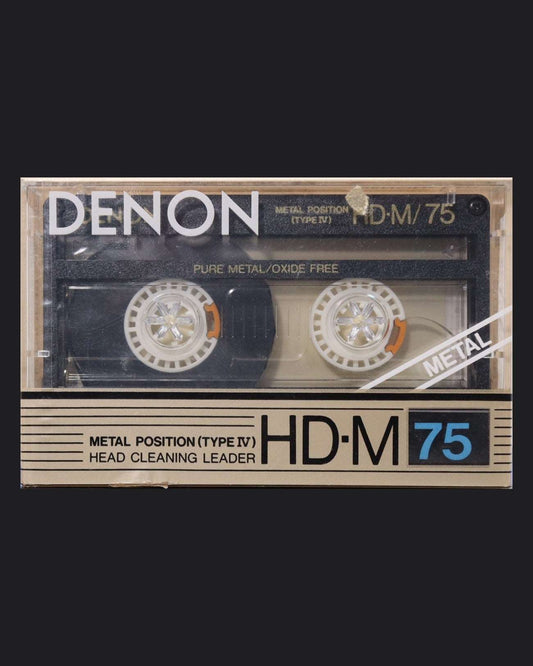
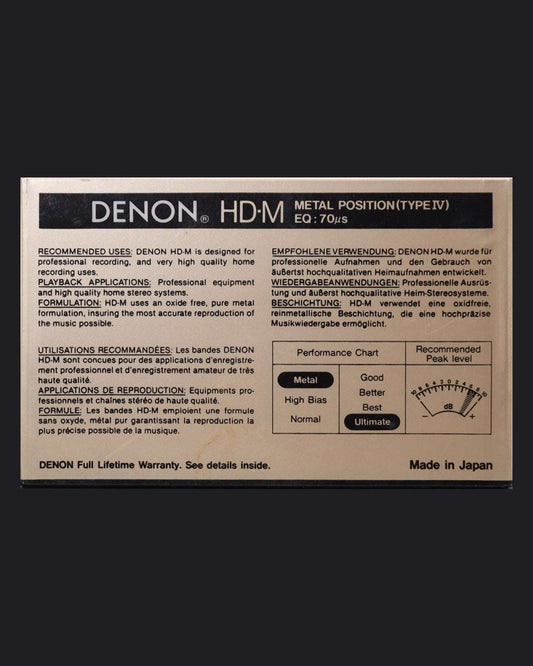
Denon HD·M Type IV - 1988-1990 US
Regular price From $57.01 USDRegular price -
Sony XIV Type IV - 1992 JP
Regular price From $20.39 USDRegular price -
 Sold out
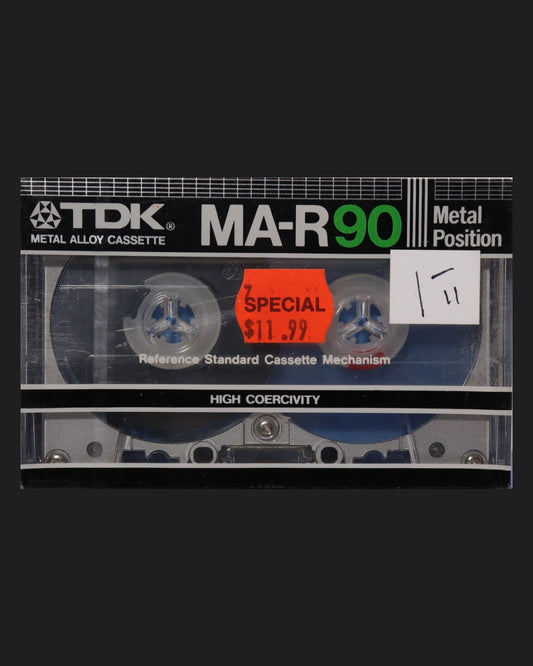
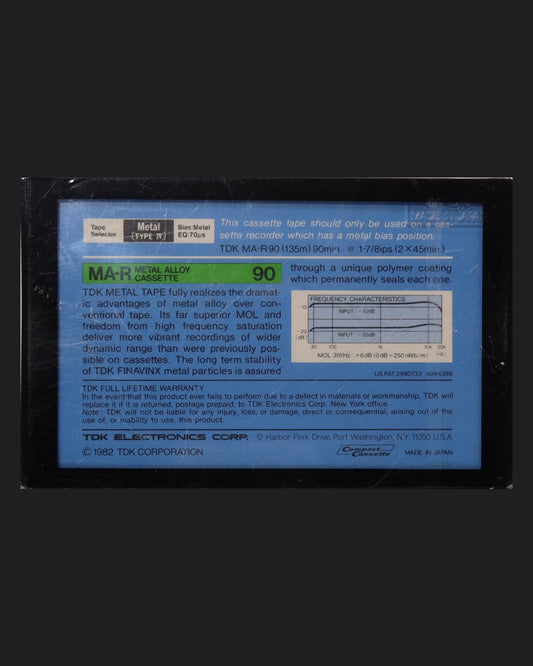
TDK MA-R Type IV - 1982-1984 US
Regular price From $157.81 USDRegular price -

 Sold out
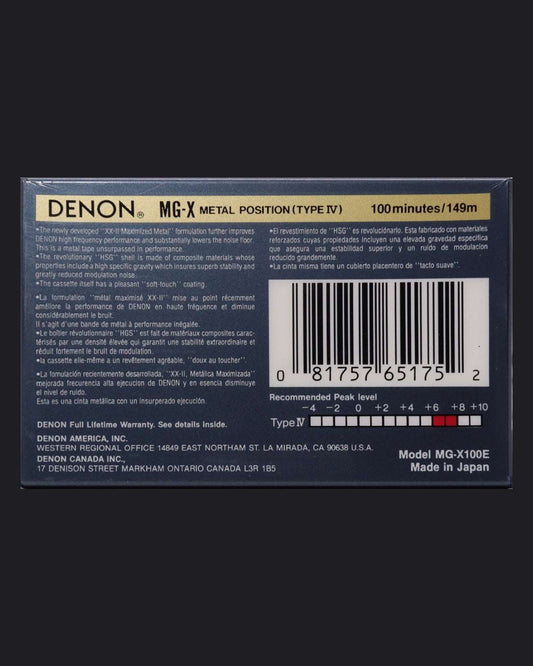
Denon MG-X Type IV - 1992-1993 US
Regular price From $144.71 USDRegular price









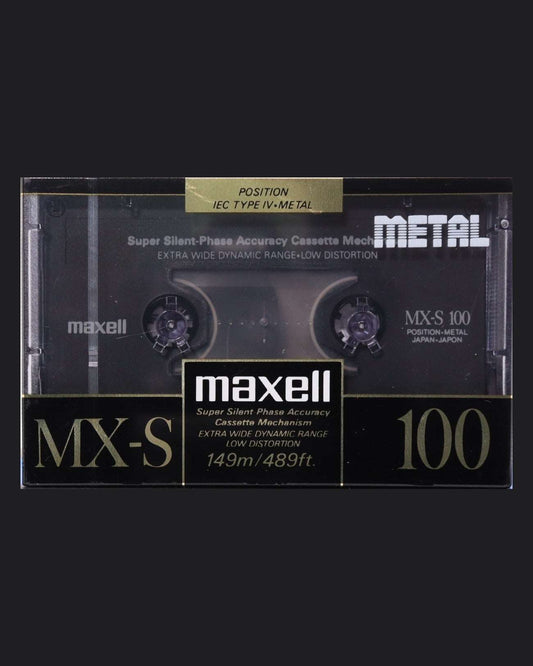
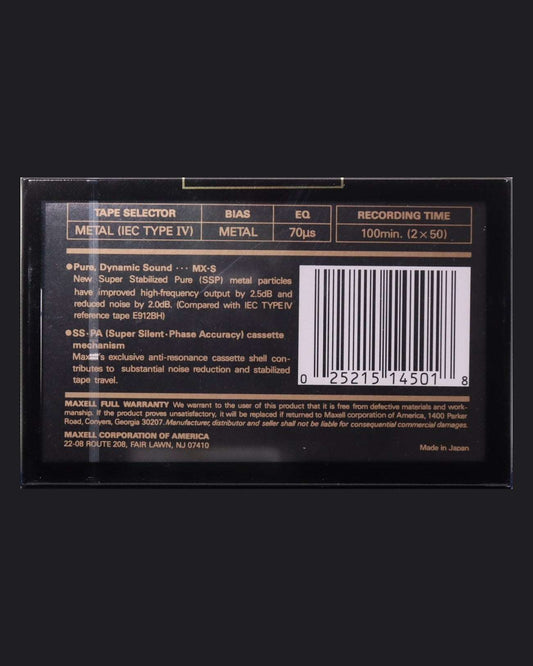

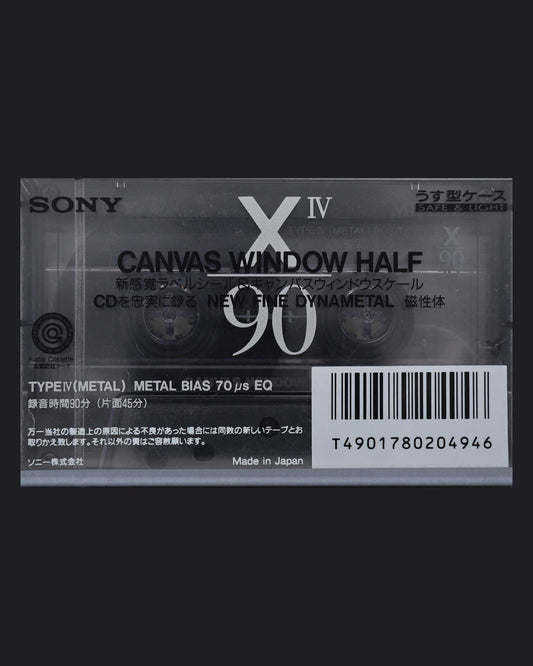

Premium Type IV — High Performance Metal Blank Cassette Tapes
The premium tier of Type IV represents the absolute peak of cassette tape technology — the result of manufacturers pushing metal particle engineering to its physical limits. Through the mid-1980s to late 1990s, engineers refined particle size to sub-micron dimensions, introduced double-coated magnetic layers, experimented with cobalt-alloyed metal particles reaching coercivity above 1,500 Oe, and in some cases developed metal-evaporated (ME) formulations that vacuum-deposited metal directly onto the tape backing without a binder layer.
Key premium Type IV tapes:
- Sony Metal ES — widely regarded as the first commercially successful dual-layer metal tape (introduced 1987). In Howard Roberson's landmark 1987 Audio Magazine comparative test, Metal ES "had the highest 400 Hz modulation and highest signal-to-noise ratio, both by sizable margins" — an 88% overall rating, described as "the best performing of any type evaluated to date."
- Maxell Metal Capsule and Metal XS — Japan-market flagship metal tapes with ultra-fine particles and improved dynamic range over the standard MX-S line.
- TDK MA-XG — TDK's reference-class metal tape with extra-fine metal particles and precision shell engineering.
Premium Type IV tapes require a deck with a metal position and reward the best playback equipment. On a well-calibrated reference deck, these tapes approach open-reel tape performance within the compact cassette format.
All tapes are NOS sealed. Free US shipping on orders over $75.
Frequently Asked Questions
What makes a Type IV metal tape 'premium'?
Premium Type IV tapes use ultra-fine metal particles, dual-layer magnetic coatings, cobalt-alloyed metal particles with coercivity above 1,500 Oe, or metal-evaporated (ME) technology. These innovations pushed cassette performance to its absolute physical limit.
What is the Sony Metal ES cassette tape?
Sony Metal ES (1987) is widely regarded as the first commercially successful dual-layer metal cassette tape. Its double-coated formula with ultra-fine extralloy particles achieved the highest MOL and SNR of any cassette tested to that date, earning an 88% overall rating in Howard Roberson's landmark 1987 Audio Magazine comparative test.
What is the difference between Sony Metal ES and Metal Master?
The Sony Metal Master uses Metal ES tape loaded into a ceramic composite shell. The ceramic shell damps resonances that even precision plastic shells cannot fully eliminate. The Super Metal Master goes further with an exclusive four-layer coating — three magnetic layers plus a back coating — representing Sony's absolute peak cassette technology.
What is a metal evaporated (ME) cassette tape?
Metal evaporated tape deposits metal directly onto the film backing in a vacuum, eliminating the binder layer used by conventional metal particle tapes. Pioneered by Matsushita/Panasonic, ME technology produces exceptional magnetic density and theoretical performance advantages, though it was expensive and difficult to mass produce for audio.
Which premium Type IV metal tapes are the most collectible?
Sony Metal Master (ceramic shell) and Super Metal Master (four-layer coating, signed metal tin) are the most coveted. Maxell Metal XS and Metal Capsule, TDK MA-XG, and Denon MG-X (ceramic shell) are also highly prized. These were produced in limited quantities, often Japan-market exclusives, and command significant premiums today.